
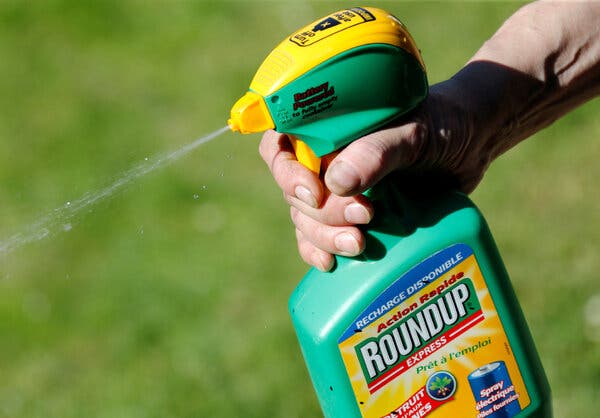
TRUMP ADMINISTRATION MOVES TO BOOST PRODUCTION OF KEY INGREDIENT USED IN ROUNDUP WEED KILLER
In a move that has sparked debate among environmentalists and farmers, the Trump administration announced last week a new executive order aimed at increasing production of glyphosate, a key ingredient in Monsanto’s popular Roundup weed killer. The order, which was met with both praise and criticism from various stakeholders, is seen as an attempt to boost agricultural productivity and reduce regulatory hurdles for the use of glyphosate.
Glyphosate, a non-selective herbicide, has been at the center of controversy in recent years due to concerns over its potential health impacts on humans and the environment. While widely used by farmers around the world, Roundup has been linked to increased risk of cancer in several studies, prompting some countries to ban or restrict its use.
The Trump administration’s move to boost production of glyphosate comes as part of a broader effort to roll back regulations on the chemical industry. In March, the Environmental Protection Agency (EPA) announced plans to reverse a Obama-era decision to label glyphosate as “likely to be carcinogenic,” citing new evidence from industry-funded studies that found no conclusive link between glyphosate and cancer.
According to sources within the administration, the executive order aims to “streamline” regulatory processes for the production of glyphosate, making it easier for companies to manufacture and distribute the chemical. The order also calls for increased investment in research and development of new uses for glyphosate, including its potential application in agriculture and forestry.
The move has been welcomed by farming groups and agribusinesses, which see glyphosate as a crucial tool in maintaining crop yields and controlling weeds. “Glyphosate is an essential ingredient in modern agriculture,” said a spokesperson for the American Farm Bureau Federation. “We’re grateful that the administration is taking steps to ensure its continued availability.”
However, environmental groups have expressed outrage over the move, citing concerns over the potential health impacts of glyphosate on farmworkers and consumers. “This is a reckless attempt by the Trump administration to prioritize corporate interests over public health,” said a spokesperson for the Environmental Working Group (EWG). “We urge the EPA to exercise caution in its review of glyphosate and take into account the overwhelming evidence linking it to cancer.”
The impact of the executive order on glyphosate production is expected to be significant. According to industry estimates, the move could lead to an increase in domestic glyphosate production by up to 30%, reducing reliance on imported supplies from countries like China.
However, critics argue that the administration’s emphasis on boosting glyphosate production comes at a time when concerns over its use are growing. In recent years, several European countries have banned or restricted the use of Roundup due to concerns over its potential health impacts.
“It’s ironic that the Trump administration is trying to boost production of a chemical that has been linked to cancer,” said Dr. Maria Rodriguez, a researcher at the University of California who has studied the effects of glyphosate on human health. “We need more research on the safety of glyphosate before we allow its widespread use.”
The executive order has also sparked debate over the role of the EPA in regulating chemicals like glyphosate. Critics argue that the agency’s recent decision to reverse its previous stance on glyphosate’s potential health impacts undermines public trust in government regulation.
“The administration’s move is a clear example of the revolving door between industry and regulators,” said a spokesperson for the Sierra Club. “We urge the EPA to prioritize science-based decision-making over corporate interests.”
In response to criticism, the White House has defended the executive order as a necessary step towards boosting agricultural productivity and reducing regulatory burdens on American farmers.
“The administration is committed to supporting our nation’s farmers and ensuring they have access to the tools they need to succeed,” said a spokesperson for the White House. “We believe that glyphosate is an essential ingredient in modern agriculture, and we’re taking steps to ensure its continued availability.”
The impact of the executive order on glyphosate production is expected to be significant, with industry estimates suggesting it could lead to increased use of the chemical in agriculture. However, critics argue that the administration’s emphasis on boosting glyphosate production comes at a time when concerns over its use are growing.
As the debate over glyphosate continues, one thing is clear: the Trump administration’s executive order has ignited a firestorm of controversy and debate among stakeholders. While some welcome the move as a necessary step towards boosting agricultural productivity, others see it as a reckless attempt to prioritize corporate interests over public health.
BACKGROUND
Glyphosate, also known as Roundup, has been widely used by farmers around the world since its introduction in the 1970s. The chemical is a key ingredient in many herbicides and weed killers, including Monsanto’s popular Roundup brand.
However, concerns over glyphosate’s potential health impacts on humans and the environment have grown in recent years. In 2015, the International Agency for Research on Cancer (IARC) classified glyphosate as “probably carcinogenic to humans,” citing evidence from several studies that linked it to increased risk of cancer.
In response to the IARC classification, several countries, including France and Belgium, banned or restricted the use of Roundup due to concerns over its potential health impacts. The European Union has also moved to restrict the use of glyphosate, pending further research on its safety.
IMPACT
The Trump administration’s executive order is expected to have a significant impact on glyphosate production and use in agriculture. According to industry estimates, the move could lead to an increase in domestic glyphosate production by up to 30%, reducing reliance on imported supplies from countries like China.
However, critics argue that the administration’s emphasis on boosting glyphosate production comes at a time when concerns over its use are growing. The executive order has sparked debate among stakeholders, with some welcoming it as a necessary step towards boosting agricultural productivity and others seeing it as a reckless attempt to prioritize corporate interests over public health.
As the debate over glyphosate continues, one thing is clear: the Trump administration’s executive order has ignited a firestorm of controversy and debate among stakeholders. The impact of the move on glyphosate production and use in agriculture will be significant, with far-reaching implications for human health and the environment.
Source:
The New York Times