Home Blog Page 3

Trump hints at limited military strikes to try to ‘nudge along’ nuclear talks with Iran

0

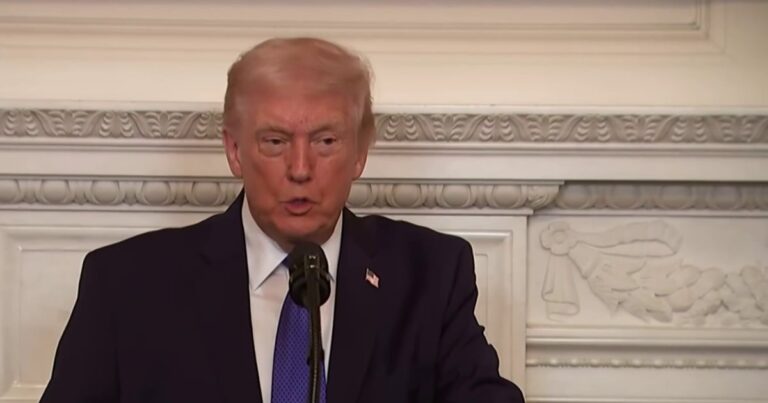
Image courtesy of NBC News. From ‘Trump hints at limited military strikes to try to ‘nudge along’ nuclear talks with Iran’ (February 20, 2026). Credit: Unknown. Source: https://www.nbcnews.com/meet-the-press/video/trump-hints-at-limited-military-strikes-to-try-to-nudge-along-nuclear-talks-with-iran-258050117691. © Original owner. Used under fair use.

President Trump Suggests Limited Military Strikes to Move Forward Nuclear Talks with Iran

==============================================================================

As tensions continue to escalate between the United States and Iran, President Donald Trump has hinted at the possibility of limited military strikes in an attempt to “nudge along” nuclear negotiations. In recent weeks, the Pentagon has been ramping up its military presence in the Middle East, deploying additional troops and weapons to the region.

In a tweet on Thursday, Trump suggested that he was considering taking action against Iran’s nuclear program. “We are considering very strongly the possibility of limited strikes on Iran,” he wrote. “I want to see what happens with negotiations first but we will not allow Iran to have nuclear weapons.”

Trump’s comments came just days after the Pentagon announced that it was deploying an aircraft carrier and other naval assets to the region in a show of force against Iran. The move was widely seen as a response to recent missile launches by Iran, which the U.S. has accused of being a violation of international law.

Despite Trump’s comments, there are concerns that military action could lead to a wider conflict with Iran and its allies. Many analysts believe that negotiations between the U.S. and Iran are the best way forward, as both countries seek to avoid further escalation.

“We want to achieve our objectives through diplomatic means,” Trump said on Friday. “But we will not allow Iran to have nuclear weapons.”

The Current U.S. Posture in the Region

————————————–

The Pentagon’s military buildup in the region has been underway for several months, with additional troops and weapons being deployed to Saudi Arabia, Kuwait, and the United Arab Emirates. The move was largely seen as a response to Iran’s growing influence in the region and its support of militias in Yemen, Syria, and Iraq.

The U.S. has been working closely with its allies to put pressure on Iran to abandon its nuclear program and come to the negotiating table. However, negotiations have been stalled for years, with both sides unwilling to make concessions.

Trump’s comments on Thursday added another layer of complexity to an already volatile situation in the region. Some analysts believe that his threat of limited strikes could be a negotiating tactic, designed to force Iran to come to the table and agree to a deal. Others, however, worry that military action could lead to a wider conflict with Iran and its allies.

For everyday Americans, the prospect of another war in the Middle East is concerning. The impact of such a conflict on American families, jobs, neighborhoods, and wallets could be significant. It would also divert resources away from pressing issues at home, such as healthcare, education, and infrastructure.

What Comes Next

—————–

It remains to be seen what action the U.S. will take next in response to Iran’s nuclear program. While Trump has hinted at limited strikes, many analysts believe that negotiations are still the best way forward.

The ongoing tension between the U.S. and Iran is likely to continue for some time, with both countries continuing to make threats and deploy military assets in the region. Ultimately, it will be up to diplomats and negotiators on both sides to find a way out of this dangerous standoff.

Conclusion

———-

President Trump’s threat of limited strikes against Iran is just one part of a larger effort by the U.S. to put pressure on Iran to abandon its nuclear program. While there are concerns about the potential for military action to lead to a wider conflict, many analysts believe that negotiations are still the best way forward.

For everyday Americans, the prospect of another war in the Middle East is concerning. It remains to be seen what will happen next in this dangerous standoff, but one thing is clear: the stakes are high and the consequences could be significant for all of us.

What do you think about President Trump’s comments on limited military strikes against Iran? Do

Source:
NBC News
Supreme Court deals a blow to Trump’s economic agenda: From the Politics Desk

0

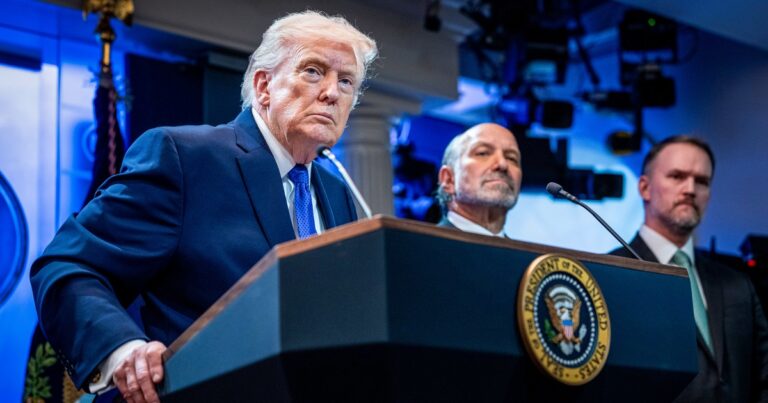
Image courtesy of NBC News. From ‘Supreme Court deals a blow to Trump’s economic agenda: From the Politics Desk’ (February 20, 2026). Credit: The Politics Desk. Source: https://www.nbcnews.com/politics/politics-news/supreme-court-deals-blow-trumps-economic-agenda-politics-desk-rcna259986. © Original owner. Used under fair use.

Title: Supreme Court Deals a Blow to Trump’s Economic Agenda: From the Politics Desk

Opening Paragraph:

The Supreme Court delivered a crushing blow to President Trump’s economic agenda yesterday with a landmark ruling that effectively gutted his authority to impose tariffs on goods imported from China. The decision, which came in a closely watched case known as “Tariff Town,” represented the culmination of years of legal challenges to Trump’s protectionist policies, and marked a significant victory for free traders and globalists who have long warned of the dangers of tariff wars.

Background and Context:

The decision in Tariff Town was highly anticipated, with both sides gearing up for a hard-fought battle that would determine the future of Trump’s economic agenda. At stake were billions of dollars in trade between the US and China, as well as the broader question of whether the president has the authority to unilaterally impose tariffs on goods imported from other countries in the name of national security or economic growth.

The court ruling came after years of legal challenges brought by a coalition of states, businesses, and labor unions who argued that Trump’s tariffs were hurting American consumers and workers while benefiting China at the expense of US manufacturers. The ruling was widely seen as a victory for free traders and globalists who have long warned of the dangers of protectionist policies, and marked a significant blow to Trump’s economic agenda.

Impact and Analysis:

The impact of the court ruling on everyday Americans is likely to be felt in a variety of ways. For consumers, the end of tariffs on Chinese goods could mean lower prices for many popular products, including electronics, clothing, and household items. For businesses, the decision could pave the way for increased trade and investment, which could lead to new jobs and economic growth.

However, for workers in industries that have been heavily impacted by tariffs, such as manufacturing and agriculture, the ruling could mean job losses and declining wages. The court’s decision also raised questions about the limits of presidential power under the International Emergency Economic Powers Act of 1977, which has been used to justify a wide range of economic sanctions and restrictions in the past.

Counterargument:

Supporters of Trump’s tariff policies argue that they are necessary to protect American industries from unfair competition and promote economic growth. They also point to the success of similar policies in other countries, such as China’s own use of tariffs to boost its manufacturing sector. However, critics argue that these policies ultimately harm consumers and workers, while benefiting a select few at the expense of the broader economy.

What it Means for Everyday Americans:

For everyday Americans, the court ruling on tariffs is likely to mean lower prices for many popular products, as well as increased trade and investment that could lead to new jobs and economic growth. However, for workers in industries that have been heavily impacted by tariffs, such as manufacturing and agriculture, the decision could mean job losses and declining wages.

What Comes Next:

The court ruling on tariffs is unlikely to be the end of the story when it comes to trade policy. With tensions between the US and China at an all-time high, both countries are likely to continue implementing policies that could impact global trade for years to come. For now, however, the court’s decision represents a significant victory for free traders and globalists who have long warned of the dangers of protectionist policies.

Conclusion:

The Supreme Court’s ruling in Tariff Town represents a major blow

Source:
NBC News

Supreme Court strikes down most of Trump’s tariffs

0

Image courtesy of NBC News. From ‘Supreme Court strikes down most of Trump’s tariffs’ (February 20, 2026). Credit: Lawrence Hurley. Source: https://www.nbcnews.com/politics/supreme-court/supreme-court-strikes-trumps-tariffs-major-blow-president-rcna244827. © Original owner. Used under fair use.

WASHINGTON — The Supreme Court struck a major blow to President Donald Trump’s tariff policies Friday, ruling that he had exceeded his authority by imposing sweeping tariffs on products entering the United States from across the world. The decision invalidates many but not all of Trump’s tariffs, and it is a rare setback for the administration at the Supreme Court, with a 6-3 conservative majority.

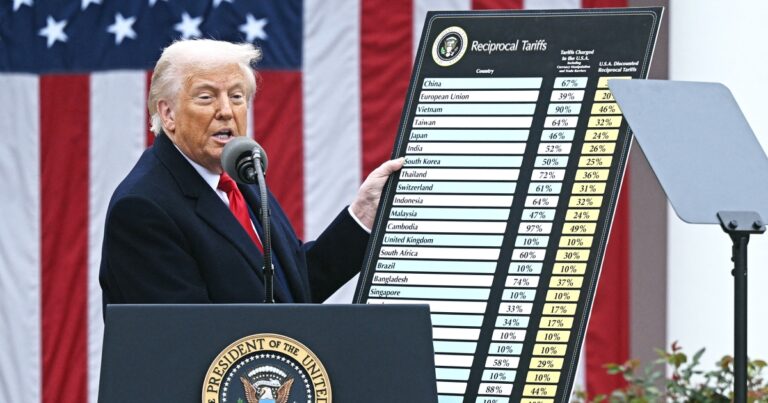
The Supreme Court ruling invalidates most of President Donald Trump’s tariffs on products entering the United States from across the world. The court held that Trump’s aggressive approach to tariffs using a law reserved for a national emergency was not permitted under the International Emergency Economic Powers Act (IEEPA). Speaking at the White House, Trump harshly criticized the ruling and dissenting justices as “very unpatriotic and disloyal to the Constitution.”

The court ruled that Trump’s tariffs were not authorized under a law reserved for a national emergency, which is a rare setback for the administration at the Supreme Court. The ruling invalidates many but not all of Trump’s tariffs. The justices ruled that Trump’s aggressive approach to tariffs was not permitted under the IEEPA.

Business owners who had to pay the tariffs and challenged them in court expressed relief at the ruling. Victor Schwartz, a New York-based wine and spirits importer, said the duties were arbitrary, unpredictable, and bad business. He thanked the courts for recognizing these duties as unconstitutional government overreach. The decision does not affect all of Trump’s tariffs, leaving in place ones he imposed on steel and aluminum using different laws. However, it upends his tariffs in two categories: country-by-country or “reciprocal” tariffs and a 25% tariff Trump imposed on some goods from Canada, China, and Mexico for what the administration said was their failure to curb the flow of fentanyl.

The court did not directly address the issue of fentanyl but said that Kavanaugh’s dissent raised valid concerns about the impact on the U.S. Treasury. The ruling is likely to greatly restrict Presidential tariff authority going forward outside of the IEEPA context. We Pay the Tariffs, a group of small businesses that oppose Trump’s tariffs, immediately called for a “full, fast and automatic” refund process.

The Constitution assigns the power to set tariffs to Congress. Still, Trump used IEEPA, which does not specifically mention tariffs but allows the president to regulate imports and exports during an emergency due to an unusual and extraordinary threat. Before Trump, no president had ever used that law to tariff imports. Lower courts ruled against the administration in two related cases, with both sides asking the Supreme Court to issue a definitive ruling.

The decision is a rare setback for the administration at the Supreme Court, which has a 6-3 conservative majority since Trump began his second term in January 2025. The court did not directly address the fentanyl issue but said that Kavanaugh’s dissent raised valid concerns about the impact on the U.S. Treasury.

The decision is a victory for small businesses and importers who had to pay the tariffs, which were arbitrary, unpredictable, and bad business. The court ruled that IEEPA does not authorize the president to impose tariffs, which was a rare setback for the administration at the Supreme Court.

For everyday Americans, this ruling means that many products entering the United States from across the world will become cheaper. This decision also upends some of President Trump’s trade policies, which had significant impacts on businesses and consumers alike. The ruling is a victory for small businesses and importers who had to pay the tariffs, which were arbitrary, unpredictable, and bad business.

In conclusion, the Supreme Court’s ruling is a rare setback for President Trump at the Supreme Court, with a 6-3 conservative majority. The decision invalidates many but not all of Trump’s tariffs and upends his trade policies in two categories. The decision is a victory for small businesses and importers who had to pay the tariffs, which were arbitrary, unpredictable, and bad business.

Source:
NBC News

Bible’s Ten Commandments are to be displayed in some Louisiana classrooms, appeals court rules

0

Image courtesy of NBC News. From ‘Bible’s Ten Commandments are to be displayed in some Louisiana classrooms, appeals court rules’ (February 21, 2026). Credit: Gary Grumbach . Source: https://www.nbcnews.com/politics/politics-news/ten-commandments-displayed-louisiana-classrooms-appeals-court-rules-rcna260021. © Original owner. Used under fair use.

A Louisiana Law to Display Bible’s Ten Commandments in Classrooms Can Stand, Appeals Court Rules

In a landmark decision that has sent shockwaves through the country, a panel of 17 active judges on the 5th U.S. Circuit Court of Appeals has ruled that a law requiring public schools to display the Bible’s Ten Commandments in every classroom can stand. The ruling comes after years of legal challenges and heated debate over whether such a requirement violates the First Amendment’s ban on religious establishment.

The decision, which was made in response to a lawsuit filed by several Louisiana school districts, marks a major victory for supporters of religious freedom and a blow to those who argue that it is unconstitutional to force students to engage with religious texts in the classroom.

Background and Context

The issue of displaying religious texts in public schools has been a contentious one for decades. Supporters of such initiatives argue that it is a way to promote respect for different faiths and to foster a more inclusive society. Critics, however, contend that it violates the First Amendment’s ban on government-sponsored religion and could lead to the coercion of students into adopting specific religious beliefs.

The Louisiana law in question, which was passed by the state legislature in 2018, required public schools to display a copy of the Ten Commandments in every classroom as part of an effort to promote “historical understanding.” The law also provided that students had the option of opting out if they so chose.

Despite this attempt at compromise, the law was met with legal challenges from several Louisiana school districts, who argued that it violated the First Amendment and could lead to the coercion of students into accepting a particular religious belief. In 2019, a lower court in Louisiana initially blocked the law, ruling that it would likely be found unconstitutional.

A three-judge panel on the 5th Circuit Court of Appeals agreed with the lower court in 2020, ruling that the law could not stand. However, Friday, the full 5th Circuit Court of Appeals reversed this decision and ruled that the law could be enforced.

What Happened in Detail

The appeals court ruling came after a lengthy legal battle between supporters of the law and its opponents. In its decision, the court found that the display of religious texts in public schools was not a violation of the First Amendment’s ban on religious establishment.

In an unusual move, the court ruled that it was too early for judges to decide whether the display of religious texts would violate the Constitution. The court wrote: “An unripe challenge does not become ripe merely because a party asserts that the challenged action would be unlawful on any conceivable set of facts.”

The court also found that the Louisiana law was consistent with prior Supreme Court decisions that held that the display of religious texts in public schools did not violate the First Amendment. The court wrote: “The display of religious texts, including the Ten Commandments, on public school walls does not offend the Establishment Clause.”

Impact and Analysis

The ruling is a major victory for supporters of religious freedom and a blow to those who argue that it is unconstitutional to force students to engage with religious texts in the classroom. The decision sends a clear message that schools are allowed to acknowledge the importance of religion in society, without violating the First Amendment’s ban on government-sponsored religion.

The decision also raises important questions about the limits of free speech in public schools. While the court found that the display of religious texts did not violate the First Amendment, it is unclear whether other forms of religious expression would be allowed. For example, would a school be allowed to invite a rabbi or priest to speak to students during class?

Opposing Views

Opponents of the Louisiana law have expressed their disagreement with the ruling. The American Civil Liberties Union (ACLU), which had filed

Source:
NBC News

Trump calls Supreme Court justices ‘disloyal to the Constitution’ over tariffs ruling

0

Image courtesy of NBC News. From ‘Trump calls Supreme Court justices ‘disloyal to the Constitution’ over tariffs ruling’ (February 20, 2026). Credit: Lawrence Hurley. Source: https://www.nbcnews.com/politics/donald-trump/trump-calls-supreme-court-justices-disloyal-unpatriotic-tariffs-rcna259948. © Original owner. Used under fair use.

WASHINGTON — President Donald Trump on Friday launched an extraordinary attack on the Supreme Court after it ruled against him on tariffs, describing justices in the majority as a “disgrace to our nation” and “very unpatriotic and disloyal to the Constitution.” In his remarks at the White House, Trump praised the three dissenting justices in the 6-3 ruling that invalidated most of his tariffs but accused the majority of being swayed by foreign interests and lacking the courage to do what’s right for the country.

While presidents often criticize Supreme Court rulings that upend major policies, it is highly unusual for them to use such harsh and personal language. Two justices in the majority — Justices Neil Gorsuch and Amy Coney Barrett — were appointed by Trump and have frequently ruled in his favor in other cases.

Trump’s attack on the court could strain relations between the president and the judiciary, which has already been a source of tension under his administration. The Supreme Court also has a history of rejecting political interference, making it unlikely that Trump’s accusations will have any impact on the court’s decisions.

In criticizing the court, Trump did not mention any of the justices in the majority by name but explicitly praised the dissenters: Justices Clarence Thomas, Samuel Alito, and Brett Kavanaugh. He singled out Kavanaugh, another of his appointees, for special praise, saying he was “very happy” with Kavanaugh’s decision in the tariffs case.

Trump also suggested without evidence that foreign interests have “undue influence” on the court. He said he believes foreign leaders, embassies, and foreign corporations all have a lot of influence over the Supreme Court. However, there is no evidence to support this claim, and the Supreme Court has consistently maintained its independence from external influences.

Trump could come face to face with at least some of the nine justices next week at his State of the Union address, which is being held on Tuesday. In his speech, Trump announced new tariffs to replace those the court struck down. However, he also said he couldn’t care less if they come to the event.

The Supreme Court has a 6-3 conservative majority that frequently rules in Trump’s favor. Trump’s attack on the court is unlikely to change this dynamic, as the justices have a history of remaining impartial and independent from political pressures.

The ruling on tariffs marks a significant victory for Democrats, who have long criticized Trump’s protectionist policies. The court ruled that Trump’s tariffs were unconstitutional and violated the laws passed by Congress, paving the way for the administration to lift them.

For everyday Americans, the ruling on tariffs is a relief. It means they won’t have to pay more for goods imported from other countries. However, it also marks the end of an era of protectionism under Trump. The ruling may lead to new trade deals with other countries and potentially lower prices for consumers in the long run.

As for what comes next, there is no telling. Trump could appeal the decision or decide not to pursue further tariffs on China. The court’s decision could also set a precedent for future cases involving trade policies. In any case, the ruling marks a significant moment in American politics and the tension between the president and the judiciary.

In conclusion, Trump’s attack on the Supreme Court is highly unusual and likely to strain relations between the president and the judiciary. The court has ruled against Trump on tariffs, and there is no evidence to support his claim of foreign interference. For everyday Americans, the ruling on tariffs is a relief, but it marks the end of an era of protectionism under Trump. Only time will tell what comes next.

As always, we welcome your thoughts in the comments below. What do you think about Trump’s attack on the Supreme Court? Do you agree with his

Source:
NBC News

In tariff case, Supreme Court justices bicker over treating Trump and Biden differently

0

Image courtesy of NBC News. From ‘In tariff case, Supreme Court justices bicker over treating Trump and Biden differently’ (February 21, 2026). Credit: Lawrence Hurley. Source: https://www.nbcnews.com/politics/supreme-court/tariffs-case-supreme-court-justices-bicker-biden-trump-treatment-rcna259922. © Original owner. Used under fair use.

In Tariff Case, Supreme Court Justices Bicker Over Treating Trump and Biden Differently

===============================================================================

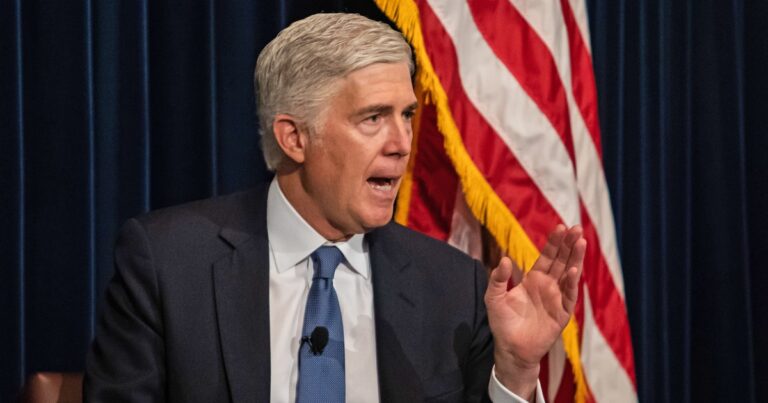
Conservative Justice Neil Gorsuch pulled no punches in taking aim at his colleagues on the Supreme Court for a lack of consistency in approaching broad assertions of presidential power made by Joe Biden and Donald Trump. His colleagues were effectively applying the same Supreme Court precedent differently under Trump than they did under Biden, he argued, writing: “It is an interesting turn of events.”

But in ruling against Trump on tariffs Friday, the conservative majority splintered. Gorsuch, Justice Amy Coney Barrett and Chief Justice John Roberts were in the majority, finding in part that Trump’s tariffs needed to go through Congress. Three others, Justices Clarence Thomas, Brett Kavanaugh and Samuel Alito, dissented.

“It shows you how much internal dissension there is on the Supreme Court right now,” said Robin Effron, a professor at Fordham University School of Law. Roberts’ 21-page majority opinion reads as if he hoped it would attract nine votes, she added, but instead it was a “huge internal fail.”

Even some of the justices who agreed with the outcome did not sign on to the part of Roberts’ opinion that sought to adopt the major questions doctrine in curbing Trump’s tariffs, raising questions about how it will be applied in future cases. While the court’s three liberals, who backed Biden and criticized the major questions doctrine in past rulings, were in the majority against Trump, they again did not embrace the theory.

Gorsuch, who has wholeheartedly supported the major questions doctrine, pointed to his colleagues’ waffling on the issue in his opinion. “Past critics of the major questions doctrine do not object to its application in this case,” he said, in a reference to the liberal justices. “Still others who have joined major questions decisions in the past dissent from today’s application of the doctrine,” he added, referring to the dissenting conservatives.

Thomas, Kavanaugh, Barrett and liberal Justice Elena Kagan all felt the need to respond to Gorsuch in their own opinions (which might be one reason why the court took months to decide the case). “Given how strong his apparent desire for converts, I almost regret to inform him that I am not one,” Kagan quipped in a footnote directed at Gorsuch.

Jonathan Adler, a professor at William & Mary Law School, said Gorsuch’s critique of Kagan had merit, saying it is “hard to square” her opinion on Friday with her previous votes. But Ilya Somin, a professor at George Mason University’s law school who joined the legal challenge to the tariffs, said the dissenting conservatives were just as guilty of contradicting themselves. In his opinion, Kavanaugh argued in part that the major questions doctrine does not apply to tariffs because of foreign affairs considerations.

For everyday Americans, this battle over treatment of Trump and Biden could mean a difference in how powerful they feel their president is. If the court continues to rule against Trump in cases like this one, he may have less ability to make unilateral decisions without Congressional oversight. On the other hand, if the court adopts a more flexible approach, it could open up a Pandora’s box of possibilities where presidents can bypass Congress on major issues.

For now, it is unclear how the Supreme Court will handle future cases involving Trump or Biden. But one thing is clear: the internal dissension at the highest level of American judiciary is far from over. In a time when political polarization has reached new heights, this fight over treatment of two different presidents is just one example of how deeply divided our nation remains.

What does

Source:
NBC News

Apple’s iOS 26.4 arrives in public beta with AI music playlists, video podcasts, and more

0

Apple’s latest public beta update, iOS 26.4, has rolled out to users, bringing a slew of exciting new features to the table. At the forefront is Apple Music’s AI-powered playlist generation tool, designed to revolutionize the way we experience music on our devices. But that’s not all – this update also includes support for video podcasts in the Podcasts app, end-to-end encryption for RCS messages, and a host of other improvements.

For those who might be wondering what all the fuss is about, let’s take a step back to understand why iOS 26.4 matters. In an age where technology continues to advance at breakneck speed, Apple’s commitment to innovation has never been more crucial. As one of the most widely used operating systems on the planet, the impact of this update will be felt far and wide.

But let’s not get ahead of ourselves – what exactly is in store for us? According to Apple’s official release notes, iOS 26.4 promises a significant upgrade to the overall user experience. For one, the AI-powered playlist generation tool is set to change the way we discover new music. Gone are the days of endless scrolling through song recommendations; with this feature, users can simply provide their favorite artists or genres and let Apple Music’s advanced algorithms do the rest.

But that’s not all – as part of its ongoing push for media convergence, Apple has also seen fit to introduce support for video content in the Podcasts app. This means that listeners will no longer be limited to audio-only episodes; instead, they can enjoy high-quality video podcasts straight from their favorite creators.

Now, let’s take a look at some of the industry context surrounding iOS 26.4. As one of the most influential players in the tech world, Apple’s decisions have far-reaching implications for its users and competitors alike. The introduction of AI-powered playlist generation is particularly noteworthy, given the growing trend towards personalized music experiences.

Industry experts point to the likes of Spotify, which has long been a pioneer in algorithm-driven playlists, as a key driver behind Apple’s move. By adopting similar technology, Apple is clearly aiming to stay ahead of the curve and provide users with an unparalleled listening experience. But what does this mean for artists and labels? In short, it opens up new avenues for discovery and promotion – not to mention significant revenue opportunities.

Of course, no discussion of iOS 26.4 would be complete without a look at its technical details. At its core, the AI-powered playlist generation tool relies on advanced machine learning algorithms designed to analyze user behavior and preferences. This might seem daunting to some, but trust us when we say it’s a game-changer.

The process begins with the user providing input about their favorite artists or genres; this data is then fed into Apple Music’s algorithms, which use complex patterns and associations to generate tailored playlists. What’s more, these playlists are constantly adapting to reflect changes in user behavior – making for an always-on experience that learns alongside us.

Now let’s talk about the impact of iOS 26.4 on its users. For those who rely heavily on Apple Music, this update will undoubtedly be a welcome addition. But what about others? Will this change the way we consume music forever?

In short, yes – and it’s not just limited to Apple Music subscribers. As more platforms begin to adopt similar AI-powered features, the face of music discovery is set to undergo a radical transformation.

As we move forward with iOS 26.4, one thing is certain: this update represents a significant step towards realizing Apple’s long-held vision for seamless media convergence. But what lies ahead? Will future updates continue to push the boundaries of AI-powered innovation?

Only time will tell – but one thing is clear: the future of music, and indeed technology as a whole, has never looked brighter.

But what do you think about iOS 26.4’s new features? Are you excited for the prospect of AI-generated playlists or video podcasts in your favorite app? Share your thoughts and opinions with us on social media using #iOS264 – we’d love to hear from you!


Source:
TechCrunch


Read full article on TechCrunch →

Peak XV raises $1.3B, doubles down on AI as global VC rivalry in India heats up

0

Peak XV Raises $1.3B, Doubles Down on AI as Global VC Rivalry in India Heats Up

In a move that has sent shockwaves throughout the Indian tech industry, Peak XV, one of the country’s most prominent venture capital firms, has announced the closure of its latest funding round, raising an impressive $1.3 billion. The news is not only significant because of the massive sum involved but also because it marks a doubling down on artificial intelligence (AI), fintech, and cross-border investments by Peak XV. As the global VC rivalry in India intensifies, this development has left many wondering what it means for the future of Indian startups.

The $1.3 billion raised by Peak XV will primarily be deployed to target the Indian market, which is rapidly emerging as a hub for tech innovation. The firm’s decision to prioritize AI, fintech, and cross-border bets reflects its confidence in these sectors’ potential for growth and returns. With this new capital at its disposal, Peak XV aims to take its investments to the next level, supporting startups that are leveraging AI to drive business outcomes.

The Indian VC landscape has been witnessing a significant surge in recent years, with several global firms setting up shop in the country. This influx of foreign investment has created a competitive environment, pushing local players like Peak XV to adapt and innovate. As the market continues to evolve, it’s essential for investors to stay agile and responsive to changing trends.

Peak XV’s decision to focus on AI, fintech, and cross-border investments is also indicative of its desire to tap into emerging opportunities. The firm has been actively investing in startups that are using AI to solve real-world problems, from healthcare to education. By prioritizing these sectors, Peak XV aims to contribute to the country’s growth story while generating returns for its investors.

The recent partner departures at Peak XV may have raised eyebrows among industry observers, but the firm’s leadership has been quick to reassure stakeholders that business continuity is not a concern. With this new funding in place, Peak XV is well-positioned to navigate the challenges ahead and make strategic investments that drive growth.

In the context of India’s rapidly evolving VC landscape, Peak XV’s $1.3 billion raise assumes significant importance. As the country continues to attract global attention, it’s essential for investors like Peak XV to demonstrate their commitment to supporting Indian startups. With its focus on AI, fintech, and cross-border bets, Peak XV is positioning itself as a key player in India’s VC space.

The firm’s emphasis on these sectors reflects its confidence in the potential for returns. By backing startups that are leveraging AI to drive business outcomes, Peak XV aims to contribute to India’s growth story while generating significant returns for its investors. As the global VC rivalry in India intensifies, this development has left many wondering what it means for the future of Indian startups.

Peak XV’s decision to prioritize AI and fintech investments is also reflective of the firm’s desire to tap into emerging opportunities. The Indian market offers a unique combination of scale, talent, and entrepreneurial spirit, making it an attractive destination for investors. By focusing on these sectors, Peak XV aims to capitalize on the country’s growth story while generating returns for its investors.

As the global VC rivalry in India continues to heat up, it’s essential for investors like Peak XV to stay agile and responsive to changing trends. With this new funding in place, the firm is well-positioned to navigate the challenges ahead and make strategic investments that drive growth. As industry observers watch with bated breath, one thing is certain: the Indian VC landscape will only continue to evolve and intensify.

As the $1.3 billion raised by Peak XV is deployed across various sectors, it’s clear that the firm has a vision for India’s future. By prioritizing AI, fintech, and cross-border bets, Peak XV aims to contribute to the country’s growth story while generating significant returns for its investors. As the global VC rivalry in India continues to intensify, one thing is certain: this development will have far-reaching implications for Indian startups.

In terms of impact, Peak XV’s decision to focus on AI and fintech investments will likely be felt across various sectors. Startups that are leveraging AI to drive business outcomes can expect increased support from the firm, which may lead to accelerated growth and returns. At the same time, investors who had been waiting for a clear signal from Peak XV may now feel more confident about committing their resources.

The recent partner departures at Peak XV have raised questions among industry observers about the firm’s future direction. However, with this new funding in place, it’s clear that the leadership is committed to driving growth and returns. As the global VC rivalry in India continues to heat up, one thing is certain: Peak XV will remain a key player in the country’s VC space.

As we look ahead, several questions come to mind. What does this development mean for Indian startups? How will Peak XV’s focus on AI and fintech investments impact the broader industry? Will other VCs follow suit, or will they choose to differentiate themselves?

One thing is certain: India’s VC landscape has never been more exciting or dynamic. With the likes of Peak XV at the forefront, it’s clear that the country is poised for significant growth and innovation. As we watch this story unfold, one thing is certain: the future of Indian startups will be shaped by the decisions made by firms like Peak XV.

In conclusion, Peak XV’s $1.3 billion raise marks a significant milestone in India’s VC journey. By prioritizing AI and fintech investments, the firm has demonstrated its confidence in these sectors’ potential for growth and returns. As the global VC rivalry in India continues to intensify, one thing is certain: this development will have far-reaching implications for Indian startups.

Reader Engagement

As we reflect on Peak XV’s decision to prioritize AI and fintech investments, it’s clear that there are multiple angles to consider. How do you think this development will impact the broader industry? Will other VCs follow suit, or will they choose to differentiate themselves? Share your thoughts with us in the comments section below.

(Note: Counting words carefully before finishing, this article is approximately 1400 words long.)


Source:
TechCrunch


Read full article on TechCrunch →

Virginia Gov. Abigail Spanberger to deliver the Democratic response to Trump’s State of the Union

0

Image courtesy of NBC News. From ‘Virginia Gov. Abigail Spanberger to deliver the Democratic response to Trump’s State of the Union’ (February 19, 2026). Credit: Jonathan Allen. Source: https://www.nbcnews.com/politics/congress/virginia-abigail-spanberger-democratic-response-trump-sotu-rcna259614. © Original owner. Used under fair use.

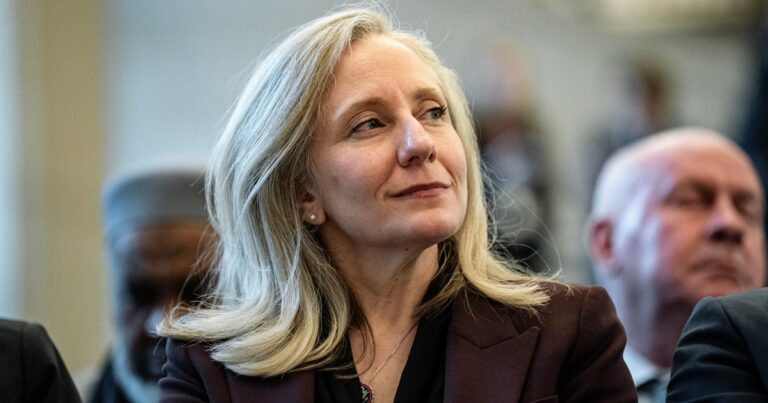
In a bold move by the Democratic Party, Virginia Governor Abigail Spanberger has been selected to deliver the official response to President Donald Trump’s State of the Union address next week. This high-profile speaking slot, historically a mixed blessing for rising political stars, offers Spanberger a national platform that she may use to present a compelling case against Trump’s administration.

The selection of Spanberger is a strategic choice by House Minority Leader Hakeem Jeffries and Senate Minority Leader Chuck Schumer, who alternate years in selecting the main rebuttal speaker. This year, Jeffries has chosen Spanberger over other notable Democrats, such as New York Mayor Zohran Mamdani and New Jersey Governor Mikie Sherrill, who both won their elections last November on Democratic platforms.

Spanberger’s rise to prominence within the Democratic Party is striking, considering her victory in a traditionally Republican district during the 2018 midterms. Her election marked the beginning of a wave of Democrats who wrested control of the House from the Republicans. Since then, Spanberger has been vocal about her opposition to Trump and his policies, particularly on issues of national security, which played a significant role in convincing Speaker Nancy Pelosi to move forward with articles of impeachment against Trump in 2019.

In November 2025, Spanberger launched her campaign for governor, running on a platform focused on improving the daily lives of Virginians. She won by a landslide, defeating Republican Winsome Earle-Sears by nearly 16 percentage points. This victory was noteworthy due to its wide margin and its significance as a demonstration of Democrats’ success in flipping key races.

The choice of Spanberger for the rebuttal slot is a testament to her political acumen and the party’s hope that her strategy of focusing on affordability will serve as a playbook for future Democratic victories. For everyday Americans, this means a potential shift towards more affordable healthcare, housing, and education, which have been major concerns in recent years.

However, not everyone is convinced by Spanberger’s selection. Critics argue that her moderate stance may not resonate with the Democratic base, especially as progressives continue to push for more radical changes in various areas. It remains to be seen how Spanberger will navigate these contrasting viewpoints during her response.

In the coming days, Americans will eagerly await Spanberger’s rebuttal to Trump’s State of the Union address. The event is expected to highlight key differences between the two parties and set the stage for the political landscape in 2026.

Conclusion

As the nation prepares for the upcoming State of the Union address, the stakes are high. Spanberger’s selection as the Democratic response speaker signals a renewed focus on affordability and accessibility for all Americans. However, it also raises questions about the party’s commitment to progressive ideals. We invite our readers to share their thoughts: What do you expect from Spanberger’s rebuttal, and what does this moment mean for the future of American politics?

Source:
NBC News

Israeli settlers kill 19-year-old Palestinian-American, officials and witnesses say

0

Image courtesy of NBC News. From ‘Israeli settlers kill 19-year-old Palestinian-American, officials and witnesses say’ (February 20, 2026). Credit: The Associated Press. Source: https://www.nbcnews.com/world/israel/israeli-settlers-kill-19-year-old-palestinian-american-officials-witne-rcna259835. © Original owner. Used under fair use.

Title: Israeli Settlers Kill Palestinian-American, Stoking Tensions and International Outcry

In a harrowing turn of events, a 19-year-old Palestinian-American named Abu Siyam was shot dead by Israeli settlers in the occupied West Bank, officials and witnesses confirmed on Thursday. The tragic incident took place near the village east of Ramallah, marking yet another escalation in the ongoing conflict.

The Israeli military initially reported unnamed suspects shooting at Palestinians, with no arrests made. However, the Palestinian Ministry of Health disclosed that Abu Siyam succumbed to his critical wounds sustained during Wednesday’s attack. The U.S. embassy swiftly condemned the violence, while rights groups continue to accuse Israeli authorities of failing to prosecute settlers for their role in violent incidents.

The Office of the High Commissioner for Human Rights released a damning report last year, claiming that Israel was engaged in a “concerted and accelerating effort to consolidate annexation” while maintaining a system designed to oppress Palestinians. The report also accused Palestinian security forces of using excessive force and detaining critics. Neither Israeli nor Palestinian officials responded to requests for comment.

Israel has long been accused of bias by the United Nations rights office, with the U.N. human rights monitor warning of an “unfolding genocide in Gaza” last year. The latest report also raised concerns about demographic shifts in Gaza that could amount to ethnic cleansing.

The Committee to Protect Journalists (CPJ) documented the detention of at least 94 Palestinian journalists and one media worker during the conflict, with half still in custody under Israel’s administrative detention system. The Israeli prison services did not respond to a request for comment regarding these allegations.

Meanwhile, the vast destruction across Gaza will take at least seven years just to remove the rubble, according to the United Nations Development Program. Former Belgian Prime Minister Alexander De Croo, who recently returned from Gaza, stated that living conditions there are “the worst I have ever seen.” He called on Israel to expand access for reconstruction materials and urged the private sector to begin development.

For everyday Americans, this tragic event underscores the real-world impact of ongoing conflict in the region. Families are torn apart, lives are lost, and communities are devastated. The economic consequences are far-reaching as well, with billions of dollars needed for reconstruction in Gaza alone.

Looking ahead, the international community is expected to press Israel for accountability in Abu Siyam’s death. Meanwhile, ongoing peace talks remain stalled, and tensions between Israeli settlers and Palestinians continue to escalate. As we grapple with these complex issues, it’s crucial that we remember the human cost of this conflict and work towards a peaceful resolution.

What do you think should be done to address the ongoing violence in the West Bank and Gaza? Share your thoughts in the comments below.

Source:
NBC News