Home Blog Page 10

How Trump Is Making Sure His Ballroom Plans Sail Through

0

Image courtesy of The New York Times. From ‘How Trump Is Making Sure His Ballroom Plans Sail Through’ (February 19, 2026). Credit: Luke Broadwater. Source: https://www.nytimes.com/2026/02/19/us/politics/how-trump-is-making-sure-his-ballroom-plans-sail-through.html. © Original owner. Used under fair use.

President Trump has taken several steps to ensure his $400 million White House ballroom project sails through without a hitch. As he pushes forward with his ambitious plan, he’s stacked the boards and commissions tasked with overseeing the project with allies, including individuals with direct ties to him and those with little expertise in the arts.

The move is reminiscent of President Harry S. Truman’s approach to adding a balcony to the White House in the 1940s. Truman faced opposition from the Commission of Fine Arts, but he ultimately built the balcony and later fired members of the commission who opposed him. Trump’s approach is similarly unyielding as he seeks to build his grand ballroom. The Commission of Fine Arts provides advice on the project but cannot block Trump’s plans.

Trump’s latest appointee to the Commission of Fine Arts is his former receptionist, Chamberlain Harris. This appointment has raised eyebrows among those who point out that the commission is supposed to include experts in relevant disciplines such as art, architecture, and landscape architecture. However, there are no landscape architects on the panel, a fact highlighted by The Cultural Landscape Foundation, an education and advocacy nonprofit based in Washington.

The lack of expertise in these areas raises concerns about the quality of decisions being made about one of the nation’s most visible designed landscapes. Critics argue that Trump is stacking the deck with allies who will rubber-stamp his plans without question. This approach undermines the very purpose of having independent commissions provide advice on large projects.

Trump’s actions have not gone unnoticed, and The Cultural Landscape Foundation has spoken out against the new makeup of the panel. They point to a “monumental deficit” in expertise on the commission, which they argue will lead to subpar decisions about the White House’s design. For everyday Americans, this story raises questions about accountability and transparency in government. Who is being held accountable for ensuring that these massive projects are done right? And what does it mean when a president stacks commissions with allies who may not have the necessary expertise?

The stakes are high as Trump’s ballroom project moves forward without significant opposition from within his administration. The project’s impact will be felt far beyond the White House, as it sets a precedent for how future administrations handle large-scale projects. If successful, this approach could lead to a culture of cronyism and lack of accountability in government.

For everyday Americans, this story highlights the importance of good governance and transparency in decision-making processes. As Trump’s ballroom project moves forward, citizens should be concerned about who is making decisions behind closed doors and how those decisions affect their lives. The outcome will be a grand ballroom that reflects the president’s vision, but at what cost to the nation’s most iconic building?

Texas Election Season Heats Up as Early Voting in Senate Primaries Begins

0

Image courtesy of The New York Times. From ‘Texas Election Season Heats Up as Early Voting in Senate Primaries Begins’ (February 18, 2026). Credit: Katie Glueck. Source: https://www.nytimes.com/2026/02/18/us/politics/texas-elections-senate-primary.html. © Original owner. Used under fair use.

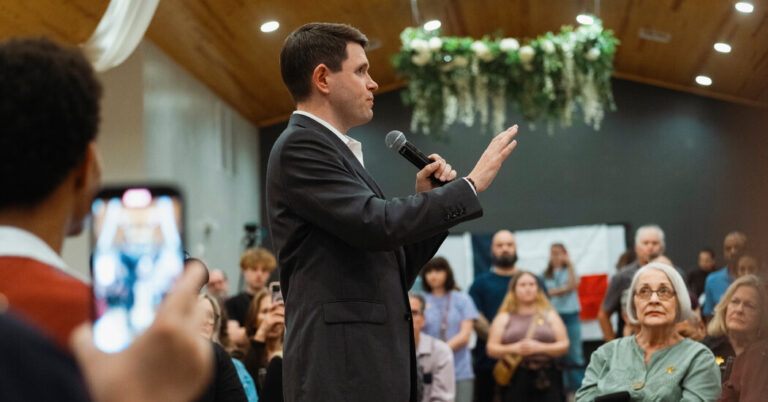
Texas election season is heating up as early voting in Senate primaries gets underway. Both parties’ primary races are now in full swing, with Republicans engaging in bitter infighting and Democrats seeing an opportunity to be competitive against the right Republican opponent.

The Texas Democratic Party has struggled at the statewide level for over three decades, but this year’s environment may prove different. State Representative James Talarico, a Democratic candidate for Senate, made national headlines last week after Stephen Colbert claimed on his late-night show that CBS stopped him from airing an interview with Talarico due to Trump administration guidance about equal airtime for political candidates. While CBS contested the account, the incident has turned Talarico into a national Trump foil at a critical moment in the race.

The Republican primary is also heating up, with various candidates vying for the nomination to take on incumbent Senator John Cornyn in November. Some have criticized Texas Attorney General Ken Paxton’s involvement in the primary, citing his record of corruption and ethics scandals. Meanwhile, other Republicans are positioning themselves as more conservative alternatives to Cornyn.

As early voting begins, both parties are pouring money into their respective Senate primaries. Democrats see this year’s environment as an opportunity to be competitive against the right Republican opponent, with many viewing Donald Trump’s popularity as a liability for some candidates. However, not all Republicans are panicking about Trump’s influence, and some argue that his support can still be beneficial in certain districts.

The stakes are high in Texas, where Democrats have struggled at the statewide level for decades. While many view this year’s environment as a chance to make gains, there is also concern that the party may fall short of expectations once again. As the primary contests heat up, one thing is clear: the Texas election season has officially kicked into high gear.

For everyday Americans, the outcome of these Senate primaries matters greatly. The next Senator from Texas will have significant sway over issues like healthcare, education, and immigration policy. Residents in the state’s many diverse districts are eager to see their voices represented at the federal level, and this year’s primary contests offer a critical opportunity for voters to make their preferences known.

As the Republican primary continues to unfold, one question looms large: can the party put aside its internal divisions long enough to mount a credible challenge against Cornyn in November? Democrats, meanwhile, are hopeful that their candidate will emerge from the primary with momentum and a clear message. Whatever the outcome, it’s clear that this year’s Senate primaries in Texas will be ones to watch.

Now that early voting has begun, readers can engage in the conversation about these critical contests. Share your thoughts on what you think is at stake in these primary elections, or ask questions about specific candidates and their platforms. With just weeks left until the first major Senate primary contests of the year take place, it’s an ideal time to weigh in on the action unfolding in Texas.

Journalists Arrested in Cameroon While Covering Secretive U.S. Deportations

0

Image courtesy of The New York Times. From ‘Journalists Arrested in Cameroon While Covering Secretive U.S. Deportations’ (February 18, 2026). Credit: Pranav Baskar. Source: https://www.nytimes.com/2026/02/18/world/africa/cameroon-journalists-arrested-deportees.html. © Original owner. Used under fair use.

In a shocking turn of events, four journalists investigating a secretive U.S. deportation program were detained by police in Cameroon on Tuesday, while interviewing migrants who had been secretly deported from the United States.

The journalists, along with a lawyer representing 15 detained migrants, were seized at a state-run compound in Yaoundé, the capital of Cameroon, where they were conducting interviews. The compound, which has been operating under wraps, is believed to be a detention center for African migrants who had been recently deported from the United States by the Department of Homeland Security.

The Trump administration’s deportation program, which has been shrouded in secrecy, has raised concerns among human rights groups and lawmakers. Under this program, migrants who were protected by U.S. courts are being sent back to their home countries, where they would likely face persecution. The migrants detained at the compound in Cameroon include individuals from Somalia, Nigeria, and other African nations.

According to government documents obtained by The New York Times, almost all of the deportees had received protection from American courts. However, despite these protections, the Department of Homeland Security has continued to deport them back to their home countries. This raises questions about the administration’s motives for implementing this program, which appears to be operating in direct contradiction to U.S. laws and international human rights agreements.

The five people detained on Tuesday were taken to the judicial police headquarters, where the journalists were separated and interrogated. According to Joseph Awah Fru, the lawyer supporting the deportees, Randy Joe Sa’ah, a freelance journalist who regularly works for the BBC, was slapped but did not sustain serious injury. The other three journalists – a reporter, a photojournalist, and a videographer – were based in Cameroon and working on assignment for The Associated Press.

The AP confirmed that one of its reporters was indeed detained, but stated that “according to our understanding, the reporter was slapped but did not sustain serious injury.” The organization did not provide further details. The detention of these journalists has sparked outrage among press freedom advocates, who argue that this is a clear attempt by the Cameroonian government to silence those who are investigating the Trump administration’s secretive deportation program.

For everyday Americans, the story of these detained journalists and migrants serves as a stark reminder of the complex issues surrounding immigration policy. As you may have wondered what has become of the thousands of immigrants who were brought here in search of safety and protection, this story shines light on the dark underbelly of U.S. deportation practices. It is not just about numbers or policies; it’s about real people who are being torn from their homes and communities, often without due process.

As the situation unfolds, human rights groups and press freedom advocates are calling for greater transparency and accountability in the Trump administration’s handling of migrant deportations. They argue that this program is a prime example of how the U.S. government can quietly disregard its own laws and international agreements to achieve its objectives. The fact that four journalists were detained while investigating these deportations only serves to underscore the need for greater scrutiny and oversight.

As we continue to follow this story, it’s clear that there are many questions still unanswered about the scope and motives of this secretive program. Will the Trump administration continue to push forward with policies that prioritize deportation over due process? And what will be the long-term impact on those who have been deported back to their home countries?

This is a complex issue that requires nuanced discussion, analysis, and debate. Share your thoughts on how you believe we should approach this situation – do we need greater transparency from the administration, or more stringent laws regulating migrant deportations? What concerns you most about this story, and what would you like to see happen next?

Justice Dept. Lawyer Is Found in Contempt by Federal Judge

0

Image courtesy of The New York Times. From ‘Justice Dept. Lawyer Is Found in Contempt by Federal Judge’ (February 19, 2026). Credit: Mattathias Schwartz and Seamus Hughes. Source: https://www.nytimes.com/2026/02/18/us/politics/justice-department-minnesota-contempt.html. © Original owner. Used under fair use.

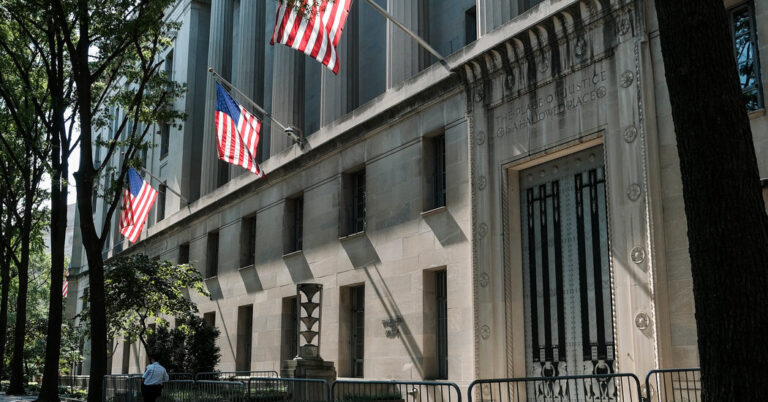
A federal judge in Minnesota has found a Trump administration lawyer in civil contempt of court for failing to return identification documents belonging to a detained immigrant. The ruling marks a significant escalation between the judiciary and the executive branch amid a ballooning caseload triggered by President Trump’s immigration raids and novel interpretations of law.

The case centers around Rigoberto Soto Jimenez, a Mexican citizen who has lived in Minnesota since 2018 with his spouse, a lawful permanent resident. He was arrested on January 14th as part of the Immigration and Customs Enforcement crackdown on undocumented immigrants living in the United States for years. Like many others, he filed a writ of habeas corpus, challenging the legality of his detention. However, the government’s lack of respect for court rulings has been a persistent issue, with judges in Minnesota and New Jersey raising concerns about the Justice Department’s compliance.

The contempt ruling was handed down by Judge Laura M. Provinzino, who ordered a $500 daily fine imposed on Matthew Isihara, an administration lawyer, for each day the documents are not returned. The judge had previously ordered Mr. Soto Jimenez to be released with all his property returned, but the government failed to comply. In an interview, Erin M. Lins, Mr. Soto Jimenez’s attorney, said that the government had released her client without his documents in El Paso and that he was forced to stay overnight at a shelter before flying back home.

The Justice Department has admitted violations in cases involving immigrants challenging the legality of their detention. In Minnesota, judges have compiled a list of nearly 100 violations of court orders in habeas cases since January 1st. The government’s lack of compliance has been criticized by both judges and lawyers representing immigrants. “Federal judges are at their wits’ end when it comes to the government,” said Muneer I. Ahmad, a Yale Law professor who represents immigrants as part of the school’s Worker and Immigrant Rights Advocacy Clinic. “Judges are no longer willing to give the benefit of the doubt to the federal government that they’re acting in good faith and with the integrity expected of government lawyers.”

This ruling marks a significant escalation in the ongoing power struggle between the judiciary and the executive branch. While civil contempt rulings are rare, this case is notable because it involves an official from President Trump’s second presidential administration being held accountable for non-compliance. “This is the first clear case of contempt this term that I know of,” said David A. Super, a law professor at Georgetown.

For everyday Americans, this story raises questions about the accountability of government officials and the rule of law. It highlights the human impact of the immigration raids and the struggles faced by immigrants who are detained and separated from their families. As the debate over immigration policy continues, it’s essential to remember that these policies have real-life consequences for individuals like Rigoberto Soto Jimenez.

As the controversy surrounding this case unfolds, readers are invited to share their thoughts on the issue of government accountability and the balance between the executive and judicial branches. What do you think about the contempt ruling, and how does it affect your understanding of the immigration debate? Do you believe that judges should hold government officials accountable for non-compliance with court orders? Share your opinions in the comments below.

Workplace Inspections by OSHA Dropped Over a Six-Month Period of 2025

0

Image courtesy of The New York Times. From ‘Workplace Inspections by OSHA Dropped Over a Six-Month Period of 2025’ (February 18, 2026). Credit: Eileen Sullivan and Rebecca Davis O’Brien. Source: https://www.nytimes.com/2026/02/18/us/politics/workplace-inspections-decrease-osha.html. © Original owner. Used under fair use.

Workplace Inspections by OSHA Dropped Over a Six-Month Period of 2025

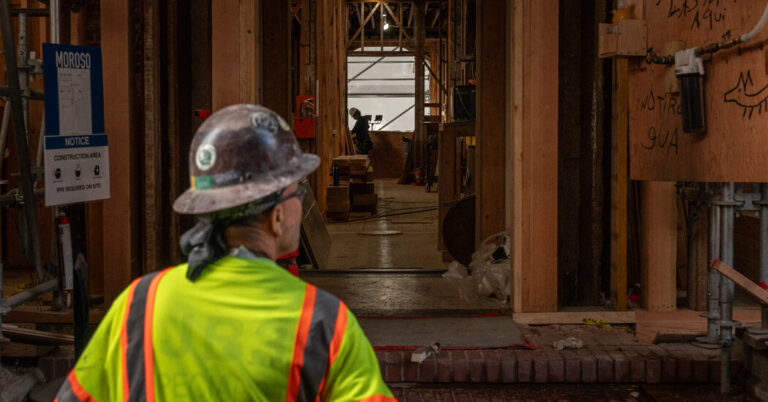
The Occupational Safety and Health Administration (OSHA) has seen a significant decrease in workplace inspections over the past six months, raising concerns among labor advocates that the Trump administration is easing its oversight of companies. According to internal data from the Labor Department, released by Senator Elizabeth Warren, OSHA conducted 23,531 inspections during this period in 2025, down 20 percent from the same time frame in 2024 when there were 29,229 inspections.

The decrease in inspections has sparked alarm among worker safety advocates, who worry that it may lead to an increase in serious injuries and deaths on the job. The Trump administration’s efforts to roll back regulations for worker safety and protections have been well-documented, including plans to close OSHA offices and offices that protect coal miners across the country. Additionally, the Labor Department has signaled its intention to pull back a requirement that employers provide adequate lighting at construction sites.

The drop in inspections comes as part of a broader pattern of deregulation efforts by the Trump administration. In its 2026 budget proposal, the administration suggested that OSHA would conduct only 24,929 inspections during the fiscal year, a number that some see as alarmingly low. This decrease in oversight has labor advocates worried that companies will take advantage of the relaxed enforcement to cut corners and put workers at greater risk.

Senator Warren and five other Senate Democrats have written a letter to Labor Secretary Lori Chavez-DeRemer and David Keeling, the assistant secretary at the department who oversees occupational safety and health. The senators expressed concern about the data, which also shows that inspections over this period yielded 42 percent fewer “willful violations,” a category that carries some of the highest penalties for employers.

“This is not just a matter of rolling back rules; OSHA appears to be taking a lighter hand in enforcing even the rules that still exist,” Ms. Warren wrote in the letter, echoing concerns raised by worker safety advocates. The data suggests that the administration’s efforts to ease regulations and oversight are having a tangible impact on workplace inspections.

The implications of this trend are far-reaching, with potential consequences for workers across the country. For everyday Americans who show up to work every day, the prospect of fewer safety inspectors and laxer enforcement is a disturbing one. Imagine going to a construction site or factory where corners are being cut and regulations are not being followed – it’s a recipe for disaster.

As the data suggests, OSHA’s reduced inspections have already led to a decrease in “willful violations,” which carry severe penalties for employers. This trend has serious implications for workers who rely on OSHA to protect them from hazardous conditions. With fewer inspectors and weaker enforcement, companies may feel emboldened to take greater risks with worker safety.

The debate over workplace safety and regulations is a contentious one, with opposing views on the role of government in policing workplaces. While some argue that regulations stifle business growth, others believe that they are necessary to protect workers from harm. As OSHA’s reduced inspections raise concerns about the potential for increased injuries and deaths, it’s clear that this debate will continue.

If you’re concerned about worker safety and the implications of OSHA’s reduced inspections, we want to hear from you. Share your thoughts on how companies can be held accountable for workplace hazards, or what steps should be taken to increase oversight and enforcement. What do you think is the most pressing issue facing workers in this country, and how can policymakers address it?

Ohio’s Covid Czar Hopes to Be the State’s Democratic Governor

0

Image courtesy of The New York Times. From ‘Ohio’s Covid Czar Hopes to Be the State’s Democratic Governor’ (February 19, 2026). Credit: Kate Zernike. Source: https://www.nytimes.com/2026/02/19/us/politics/amy-acton-vivek-ramaswamy-ohio.html. © Original owner. Used under fair use.

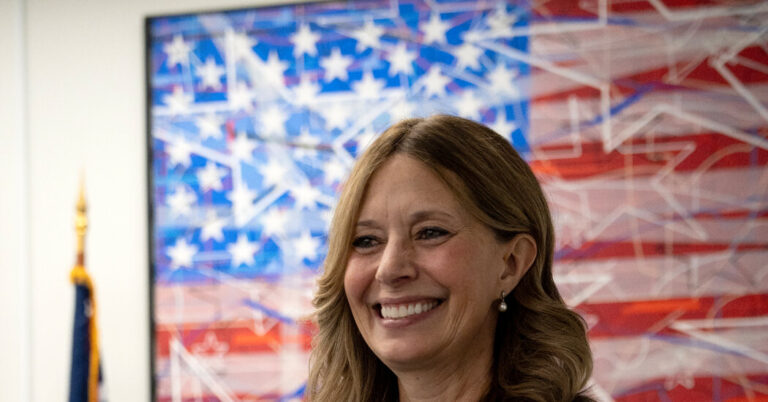
Amy Acton’s voice is one that resonates deeply with millions of Ohioans. For two years, her firm but reassuring tone was a staple in the daily Covid briefings alongside Governor Mike DeWine. She was the face of the state’s pandemic response, issuing stay-at-home orders and closing schools before many other states took similar measures. Her leadership during one of the darkest periods in American history has made her the presumptive Democratic nominee to succeed Governor DeWine.

Ohio is a Republican stronghold, but Dr. Acton’s service to the governor lends her bipartisan credibility that could be a game-changer in this election. She has built a reputation as a pragmatic moderate willing to work across party lines, something that could appeal to independents and moderate Republicans who are increasingly disillusioned with the state’s politics. However, not everyone is convinced of Dr. Acton’s intentions, and her service as Covid Czar has stirred intense emotions among some Ohioans.

The pandemic response was a highly divisive issue in Ohio, with many small-business owners and anti-vaccine activists criticizing Dr. Acton’s measures as too restrictive. Some went so far as to brandish handguns outside her home and call her antisemitic slurs. Despite the backlash, Dr. Acton remained steadfast in her commitment to protecting public health. She has said that she understands that some people may be triggered by her voice, but she believes that her service during this time demonstrates her ability to make difficult decisions in the face of uncertainty.

As the election heats up, Dr. Acton’s opponents are using her past actions as a campaign issue. Vivek Ramaswamy, the presumptive Republican nominee, has criticized Dr. Acton for being too restrictive and for “Doom”-ing the state with her lockdown orders. However, Dr. Acton’s team argues that she was simply following the science and doing what was necessary to protect public health.

For everyday Americans, this election is not just about party politics; it’s about who will make decisions that affect their lives and livelihoods. Dr. Acton’s leadership during the pandemic may have been polarizing, but it also showed her ability to navigate complex and contentious issues. As Ohioans head to the polls in November, they will be choosing between a candidate who has demonstrated a willingness to work across party lines and one who is willing to take a more partisan approach.

Dr. Acton’s campaign is built around the idea of pragmatism and moderation, something that could resonate with voters who are increasingly disillusioned with the state’s politics. However, her opponents are not giving up easily, and the election will likely be a closely contested one. As Ohioans weigh their options, they would do well to consider Dr. Acton’s service during the pandemic as a testament to her ability to make difficult decisions in the face of uncertainty.

As we move forward with this election, it’s clear that Amy Acton’s voice is not just a trigger for some; it’s also a reminder of the complex and often divisive issues that our leaders must navigate. As Ohioans cast their ballots in November, they will be deciding not only who will lead the state but also what kind of leadership they want to see from their elected officials.

Now we invite you to join the conversation about Dr. Acton’s candidacy and its implications for the state of Ohio. Share your thoughts on her leadership during the pandemic and whether or not you think she has what it takes to be a successful governor. Are there any specific issues that you think are relevant to this election, and how do you think Dr. Acton’s opponents will try to use them against her? Let us know in the comments below, and we’ll continue the discussion from there.

Texas Congressman’s Aide Told Co-Worker of Affair Before Killing Herself

0

Image courtesy of The New York Times. From ‘Texas Congressman’s Aide Told Co-Worker of Affair Before Killing Herself’ (February 19, 2026). Credit: J. David Goodman and Edgar Sandoval. Source: https://www.nytimes.com/2026/02/18/us/politics/texas-gonzales-suicide-affair.html. © Original owner. Used under fair use.

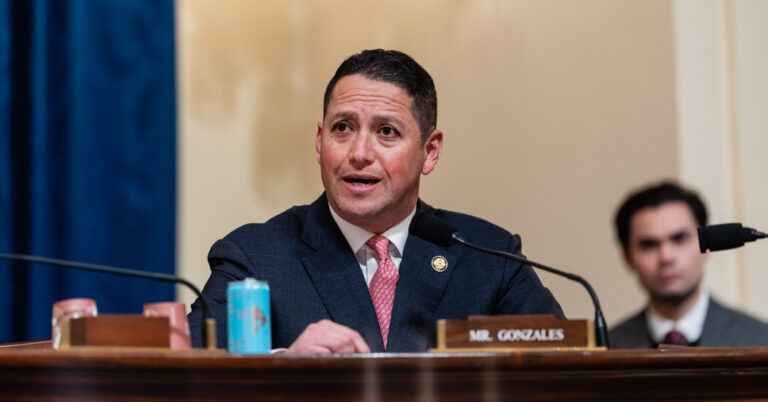
Aides to Representative Tony Gonzales of Texas have been embroiled in controversy after the release of a text message that appears to confirm an affair between the congressman and one of his staff members. The revelation has sent shockwaves through Mr. Gonzales’s re-election campaign, with some questioning the timing of the disclosure just as primary voters are casting their ballots.

Representative Tony Gonzales, a married father of six, is currently locked in a tough Republican primary fight against Brandon Herrera. While Mr. Gonzales has been endorsed by President Trump, he has at times diverged from the president’s positions on various issues. The congressman’s aides have been tight-lipped about the affair, but a co-worker who received the text message has come forward to share it with The New York Times.

The text exchange in question was sent last April 27 by Regina Ann Santos-Aviles, an aide to Mr. Gonzales who later took her own life after setting herself on fire in the backyard of her home five months later. In the message, Ms. Santos-Aviles wrote, “I had affair with our boss and I’m fine.” The text has been widely reported by local media outlets, but the identity of the staff member who received it remained unknown until now.

The co-worker who shared the text exchange with The Times said that they did not agree with Mr. Herrera’s hard-right politics, but felt compelled to come forward due to Ms. Santos-Aviles’s close friendship and her own sense of wrongdoing on behalf of the deceased aide. “I wanted to make sure people knew what had happened,” the staff member explained in an interview. The former aide also expressed frustration with Mr. Gonzales for not addressing the allegations sooner.

Mr. Gonzales has thus far declined to comment on the allegations, instead accusing his primary challenger of being behind the release of the text message. However, a spokesperson for Mr. Gonzales denied any wrongdoing and stated that the congressman was “focusing on serving his constituents.” The primary election is set to take place in just days, with many voters still undecided.

As news of the affair spreads, some are questioning whether it will impact Mr. Gonzales’s chances at re-election. Others see the revelation as a symptom of broader issues within the Republican Party, including its handling of allegations of misconduct by elected officials. “This is not just about Representative Gonzales or his primary challenger,” said one observer. “It’s about the culture of accountability and transparency that exists within our institutions.”

For everyday Americans, this story raises important questions about the behavior of those in power and how they are held accountable for their actions. What does it say when a congressman is accused of engaging in an affair with a staff member, and then denies any wrongdoing? How can voters trust politicians to make decisions that benefit the public interest if they are willing to engage in such behavior?

As this story continues to unfold, one thing is clear: Representative Tony Gonzales’s re-election campaign has been severely damaged by these revelations. But what does the future hold for those who have been hurt by his actions? Will Ms. Santos-Aviles’s family and friends be able to find closure, or will they continue to live with the knowledge of her tragic fate?

As we navigate this complex web of politics and personal relationships, it’s essential that readers engage in a thoughtful discussion about what these allegations mean for our democracy. Share your thoughts on this story: do you think Representative Gonzales should be held accountable for his actions? Should voters consider the implications of his behavior when casting their ballots in the primary election? Join the conversation by commenting below with your perspective, or share your thoughts on social media using the hashtag #GonzalesReelection.

Journalists Arrested in Cameroon While Covering Secretive U.S. Deportations

0

Image courtesy of The New York Times. From ‘Journalists Arrested in Cameroon While Covering Secretive U.S. Deportations’ (February 18, 2026). Credit: Pranav Baskar. Source: https://www.nytimes.com/2026/02/18/world/africa/cameroon-journalists-arrested-deportees.html. © Original owner. Used under fair use.

In a shocking turn of events, four journalists investigating a secretive U.S. deportation program were detained by police in Cameroon on Tuesday, while interviewing migrants who had been secretly deported from the United States.

The journalists, along with a lawyer representing 15 detained migrants, were seized at a state-run compound in Yaoundé, the capital of Cameroon, where they were conducting interviews. The compound, which has been operating under wraps, is believed to be a detention center for African migrants who had been recently deported from the United States by the Department of Homeland Security.

The Trump administration’s deportation program, which has been shrouded in secrecy, has raised concerns among human rights groups and lawmakers. Under this program, migrants who were protected by U.S. courts are being sent back to their home countries, where they would likely face persecution. The migrants detained at the compound in Cameroon include individuals from Somalia, Nigeria, and other African nations.

According to government documents obtained by The New York Times, almost all of the deportees had received protection from American courts. However, despite these protections, the Department of Homeland Security has continued to deport them back to their home countries. This raises questions about the administration’s motives for implementing this program, which appears to be operating in direct contradiction to U.S. laws and international human rights agreements.

The five people detained on Tuesday were taken to the judicial police headquarters, where the journalists were separated and interrogated. According to Joseph Awah Fru, the lawyer supporting the deportees, Randy Joe Sa’ah, a freelance journalist who regularly works for the BBC, was slapped but did not sustain serious injury. The other three journalists – a reporter, a photojournalist, and a videographer – were based in Cameroon and working on assignment for The Associated Press.

The AP confirmed that one of its reporters was indeed detained, but stated that “according to our understanding, the reporter was slapped but did not sustain serious injury.” The organization did not provide further details. The detention of these journalists has sparked outrage among press freedom advocates, who argue that this is a clear attempt by the Cameroonian government to silence those who are investigating the Trump administration’s secretive deportation program.

For everyday Americans, the story of these detained journalists and migrants serves as a stark reminder of the complex issues surrounding immigration policy. As you may have wondered what has become of the thousands of immigrants who were brought here in search of safety and protection, this story shines light on the dark underbelly of U.S. deportation practices. It is not just about numbers or policies; it’s about real people who are being torn from their homes and communities, often without due process.

As the situation unfolds, human rights groups and press freedom advocates are calling for greater transparency and accountability in the Trump administration’s handling of migrant deportations. They argue that this program is a prime example of how the U.S. government can quietly disregard its own laws and international agreements to achieve its objectives. The fact that four journalists were detained while investigating these deportations only serves to underscore the need for greater scrutiny and oversight.

As we continue to follow this story, it’s clear that there are many questions still unanswered about the scope and motives of this secretive program. Will the Trump administration continue to push forward with policies that prioritize deportation over due process? And what will be the long-term impact on those who have been deported back to their home countries?

This is a complex issue that requires nuanced discussion, analysis, and debate. Share your thoughts on how you believe we should approach this situation – do we need greater transparency from the administration, or more stringent laws regulating migrant deportations? What concerns you most about this story, and what would you like to see happen next?

Workplace Inspections by OSHA Dropped Over a Six-Month Period of 2025

0

Image courtesy of The New York Times. From ‘Workplace Inspections by OSHA Dropped Over a Six-Month Period of 2025’ (February 18, 2026). Credit: Eileen Sullivan and Rebecca Davis O’Brien. Source: https://www.nytimes.com/2026/02/18/us/politics/workplace-inspections-decrease-osha.html. © Original owner. Used under fair use.

Workplace Inspections by OSHA Dropped Over a Six-Month Period of 2025

The Occupational Safety and Health Administration (OSHA) has seen a significant decrease in workplace inspections over the past six months, raising concerns among labor advocates that the Trump administration is easing its oversight of companies. According to internal data from the Labor Department, released by Senator Elizabeth Warren, OSHA conducted 23,531 inspections during this period in 2025, down 20 percent from the same time frame in 2024 when there were 29,229 inspections.

The decrease in inspections has sparked alarm among worker safety advocates, who worry that it may lead to an increase in serious injuries and deaths on the job. The Trump administration’s efforts to roll back regulations for worker safety and protections have been well-documented, including plans to close OSHA offices and offices that protect coal miners across the country. Additionally, the Labor Department has signaled its intention to pull back a requirement that employers provide adequate lighting at construction sites.

The drop in inspections comes as part of a broader pattern of deregulation efforts by the Trump administration. In its 2026 budget proposal, the administration suggested that OSHA would conduct only 24,929 inspections during the fiscal year, a number that some see as alarmingly low. This decrease in oversight has labor advocates worried that companies will take advantage of the relaxed enforcement to cut corners and put workers at greater risk.

Senator Warren and five other Senate Democrats have written a letter to Labor Secretary Lori Chavez-DeRemer and David Keeling, the assistant secretary at the department who oversees occupational safety and health. The senators expressed concern about the data, which also shows that inspections over this period yielded 42 percent fewer “willful violations,” a category that carries some of the highest penalties for employers.

“This is not just a matter of rolling back rules; OSHA appears to be taking a lighter hand in enforcing even the rules that still exist,” Ms. Warren wrote in the letter, echoing concerns raised by worker safety advocates. The data suggests that the administration’s efforts to ease regulations and oversight are having a tangible impact on workplace inspections.

The implications of this trend are far-reaching, with potential consequences for workers across the country. For everyday Americans who show up to work every day, the prospect of fewer safety inspectors and laxer enforcement is a disturbing one. Imagine going to a construction site or factory where corners are being cut and regulations are not being followed – it’s a recipe for disaster.

As the data suggests, OSHA’s reduced inspections have already led to a decrease in “willful violations,” which carry severe penalties for employers. This trend has serious implications for workers who rely on OSHA to protect them from hazardous conditions. With fewer inspectors and weaker enforcement, companies may feel emboldened to take greater risks with worker safety.

The debate over workplace safety and regulations is a contentious one, with opposing views on the role of government in policing workplaces. While some argue that regulations stifle business growth, others believe that they are necessary to protect workers from harm. As OSHA’s reduced inspections raise concerns about the potential for increased injuries and deaths, it’s clear that this debate will continue.

If you’re concerned about worker safety and the implications of OSHA’s reduced inspections, we want to hear from you. Share your thoughts on how companies can be held accountable for workplace hazards, or what steps should be taken to increase oversight and enforcement. What do you think is the most pressing issue facing workers in this country, and how can policymakers address it?

Texas Election Season Heats Up as Early Voting in Senate Primaries Begins

0

Image courtesy of The New York Times. From ‘Texas Election Season Heats Up as Early Voting in Senate Primaries Begins’ (February 18, 2026). Credit: Katie Glueck. Source: https://www.nytimes.com/2026/02/18/us/politics/texas-elections-senate-primary.html. © Original owner. Used under fair use.

Texas election season is heating up as early voting in Senate primaries gets underway. Both parties’ primary races are now in full swing, with Republicans engaging in bitter infighting and Democrats seeing an opportunity to be competitive against the right Republican opponent.

The Texas Democratic Party has struggled at the statewide level for over three decades, but this year’s environment may prove different. State Representative James Talarico, a Democratic candidate for Senate, made national headlines last week after Stephen Colbert claimed on his late-night show that CBS stopped him from airing an interview with Talarico due to Trump administration guidance about equal airtime for political candidates. While CBS contested the account, the incident has turned Talarico into a national Trump foil at a critical moment in the race.

The Republican primary is also heating up, with various candidates vying for the nomination to take on incumbent Senator John Cornyn in November. Some have criticized Texas Attorney General Ken Paxton’s involvement in the primary, citing his record of corruption and ethics scandals. Meanwhile, other Republicans are positioning themselves as more conservative alternatives to Cornyn.

As early voting begins, both parties are pouring money into their respective Senate primaries. Democrats see this year’s environment as an opportunity to be competitive against the right Republican opponent, with many viewing Donald Trump’s popularity as a liability for some candidates. However, not all Republicans are panicking about Trump’s influence, and some argue that his support can still be beneficial in certain districts.

The stakes are high in Texas, where Democrats have struggled at the statewide level for decades. While many view this year’s environment as a chance to make gains, there is also concern that the party may fall short of expectations once again. As the primary contests heat up, one thing is clear: the Texas election season has officially kicked into high gear.

For everyday Americans, the outcome of these Senate primaries matters greatly. The next Senator from Texas will have significant sway over issues like healthcare, education, and immigration policy. Residents in the state’s many diverse districts are eager to see their voices represented at the federal level, and this year’s primary contests offer a critical opportunity for voters to make their preferences known.

As the Republican primary continues to unfold, one question looms large: can the party put aside its internal divisions long enough to mount a credible challenge against Cornyn in November? Democrats, meanwhile, are hopeful that their candidate will emerge from the primary with momentum and a clear message. Whatever the outcome, it’s clear that this year’s Senate primaries in Texas will be ones to watch.

Now that early voting has begun, readers can engage in the conversation about these critical contests. Share your thoughts on what you think is at stake in these primary elections, or ask questions about specific candidates and their platforms. With just weeks left until the first major Senate primary contests of the year take place, it’s an ideal time to weigh in on the action unfolding in Texas.