
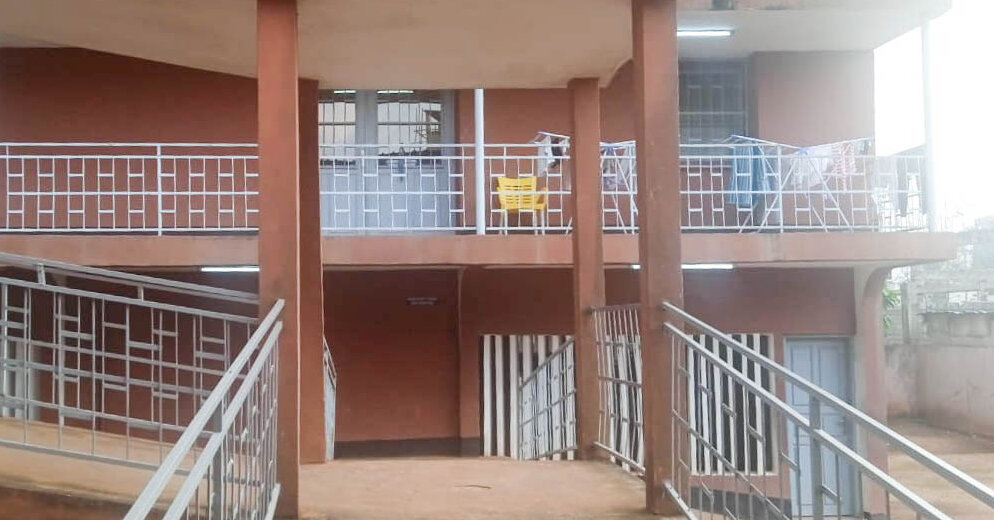
Image courtesy of The New York Times. From ‘Journalists Arrested in Cameroon While Covering Secretive U.S. Deportations’ (February 18, 2026). Credit: Pranav Baskar. Source: https://www.nytimes.com/2026/02/18/world/africa/cameroon-journalists-arrested-deportees.html. © Original owner. Used under fair use.
In a shocking turn of events, four journalists investigating a secretive U.S. deportation program were detained by police in Cameroon on Tuesday, while interviewing migrants who had been secretly deported from the United States.
The journalists, along with a lawyer representing 15 detained migrants, were seized at a state-run compound in Yaoundé, the capital of Cameroon, where they were conducting interviews. The compound, which has been operating under wraps, is believed to be a detention center for African migrants who had been recently deported from the United States by the Department of Homeland Security.
The Trump administration’s deportation program, which has been shrouded in secrecy, has raised concerns among human rights groups and lawmakers. Under this program, migrants who were protected by U.S. courts are being sent back to their home countries, where they would likely face persecution. The migrants detained at the compound in Cameroon include individuals from Somalia, Nigeria, and other African nations.
According to government documents obtained by The New York Times, almost all of the deportees had received protection from American courts. However, despite these protections, the Department of Homeland Security has continued to deport them back to their home countries. This raises questions about the administration’s motives for implementing this program, which appears to be operating in direct contradiction to U.S. laws and international human rights agreements.
The five people detained on Tuesday were taken to the judicial police headquarters, where the journalists were separated and interrogated. According to Joseph Awah Fru, the lawyer supporting the deportees, Randy Joe Sa’ah, a freelance journalist who regularly works for the BBC, was slapped but did not sustain serious injury. The other three journalists – a reporter, a photojournalist, and a videographer – were based in Cameroon and working on assignment for The Associated Press.
The AP confirmed that one of its reporters was indeed detained, but stated that “according to our understanding, the reporter was slapped but did not sustain serious injury.” The organization did not provide further details. The detention of these journalists has sparked outrage among press freedom advocates, who argue that this is a clear attempt by the Cameroonian government to silence those who are investigating the Trump administration’s secretive deportation program.
For everyday Americans, the story of these detained journalists and migrants serves as a stark reminder of the complex issues surrounding immigration policy. As you may have wondered what has become of the thousands of immigrants who were brought here in search of safety and protection, this story shines light on the dark underbelly of U.S. deportation practices. It is not just about numbers or policies; it’s about real people who are being torn from their homes and communities, often without due process.
As the situation unfolds, human rights groups and press freedom advocates are calling for greater transparency and accountability in the Trump administration’s handling of migrant deportations. They argue that this program is a prime example of how the U.S. government can quietly disregard its own laws and international agreements to achieve its objectives. The fact that four journalists were detained while investigating these deportations only serves to underscore the need for greater scrutiny and oversight.
As we continue to follow this story, it’s clear that there are many questions still unanswered about the scope and motives of this secretive program. Will the Trump administration continue to push forward with policies that prioritize deportation over due process? And what will be the long-term impact on those who have been deported back to their home countries?
This is a complex issue that requires nuanced discussion, analysis, and debate. Share your thoughts on how you believe we should approach this situation – do we need greater transparency from the administration, or more stringent laws regulating migrant deportations? What concerns you most about this story, and what would you like to see happen next?
Source: The New York Times