
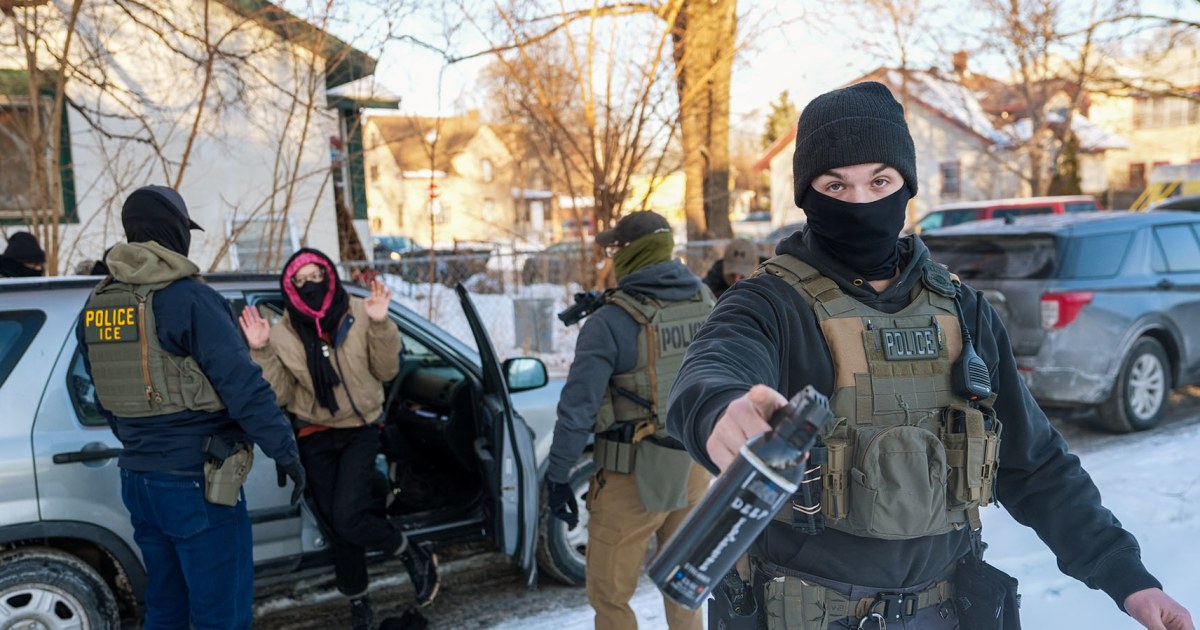
Image courtesy of NBC News. From ‘Bill of Rights put to the test over Trump’s immigration crackdown in Minnesota’ (February 22, 2026). Credit: Allan Smith. Source: https://www.nbcnews.com/politics/trump-administration/bill-rights-test-trump-immigration-crackdown-minnesota-rcna258102. © Original owner. Used under fair use.
Title: Bill of Rights Under Fire: Trump’s Immigration Crackdown Tests Constitutional Boundaries in Minnesota
In and out of court, more than half of the amendments enshrined in the Bill of Rights are being challenged as a direct result of President Donald Trump’s immigration enforcement surge in Minnesota. This unprecedented battle over fundamental constitutional rights has become a flashpoint, with conservatives and liberals clashing over alleged violations of the civil rights of minority groups.
Rep. Jamie Raskin, D-Md., a former constitutional law professor, sees a systematic violation of all fundamental constitutional rights in Minnesota, comparing it to historical instances of discrimination against Native Americans, African Americans, and Asian Americans. On the other hand, Randy Barnett, director of the Georgetown Center for the Constitution, believes that advocates are making far-fetched claims gaining traction with district court judges, labeling this contest as “unprecedented.”
The Fourth, Fifth, and Tenth amendments have been at the heart of legal battles over specific immigration enforcement actions. Immigration and Customs Enforcement (ICE) agents have entered people’s homes with administrative warrants issued by the executive branch, which has raised concerns about unreasonable searches and seizures under the Fourth Amendment. The administration’s treatment of the Fourth Amendment as a “pesky inconvenience” is a cause for concern among civil liberties advocates.
Moderate Rep. Don Bacon, R-Neb., believes the courts will step in to halt unconstitutional activity related to Minneapolis and ICE, although he questions why the administration would push the envelope in the first place. Meanwhile, the Tenth Amendment has been used by Minnesota officials to argue for a temporary restraining order against the administration, claiming that Operation Metro Surge aims to force change on state immigration policies.
The First Amendment is also under scrutiny, as CNN’s Don Lemon faces charges related to his coverage of immigration-related protests. Lemon has argued that his conduct is protected by the First Amendment, sparking debates about the limits of free speech and freedom of religion during demonstrations. Some politicians, such as Sen. Mike Rounds, R-S.D., are still considering whether Lemon’s arrest and prosecution were justified.
The Second Amendment has also come into play, with top Trump officials commenting on restricting gun rights. Rep. Thomas Massie, R-Ky., has raised objections to these statements, arguing that carrying a firearm to a protest is a constitutional right. Other conservatives have taken issue with comments following the shooting of demonstrator Pretti, who was carrying a gun during a protest.
The Third Amendment, traditionally considered a trivia question, has also made an appearance in this constitutional debate as conservatives challenge Minnesota’s quarantine orders for National Guard troops stationed at immigration detention centers.
Looking at the constitutional fights stemming from the Twin Cities in totality, law professor Beth Colgan acknowledges that it’s unclear what the long-term impact will be. However, Erwin Chemerinsky, dean of the University of California, Berkeley, law school, asserts that this is an unusual situation where one set of government actions clearly violates so many provisions of the Constitution.
For everyday Americans, this means that their jobs, health, neighborhoods, wallets, and families could be affected by these constitutional battles. As immigration enforcement policies are challenged in court, uncertainty remains over how the judiciary will rule on matters related to search and seizure, freedom of speech, religion, and gun rights.
What comes next? The courts will continue to hear arguments regarding the constitutionality of various immigration enforcement actions. It’s important to watch for upcoming rulings that could set precedents for future cases. In addition, political consequences will unfold as tensions between Trump administration officials and critics of their policies persist.
Conclusion
As the Bill of Rights is put to the test in Minnesota, it raises questions about the balance between national security and individual liberties. The ongoing constitutional debates signal a broader direction in politics, where the protection of civil rights remains a contentious issue.
What do you think about the role of the judiciary in upholding the Bill of Rights amidst President Trump’s immigration enforcement surge in Minnesota? Share your thoughts in the comments below and let us know if you believe the courts are striking the right balance between national security and individual liberties.
Source:
NBC News