
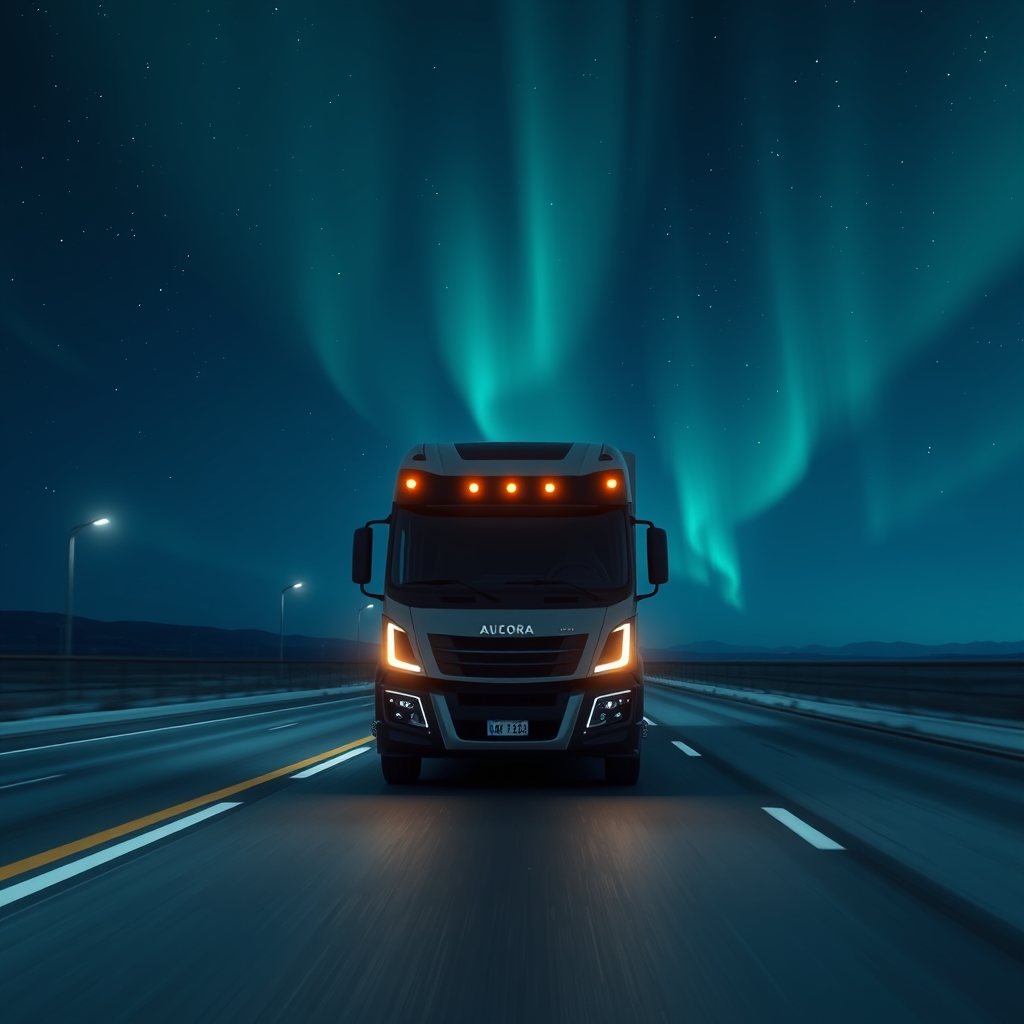
Aurora’s Driverless Trucks Can Now Travel Farther Distances Faster than Human Drivers
CEO Chris Urmson of Aurora Innovation recently highlighted a significant technological achievement by his company’s driverless trucks during an industry conference. He described it as a “superhuman” moment, emphasizing that the company’s autonomous vehicles can now safely and efficiently carry freight over distances previously deemed impracticable for human drivers—specifically, 1,000 miles in just 15 hours. This feat surpasses the legal limits for human-driven trucks on highways, underscoring Aurora’s advancements in autonomous technology.
#Background & Context
The concept of driverless vehicles has been a focal point in both automotive and tech sectors since its inception. In recent years, significant strides have been made toward achieving true autonomy in transportation systems. Companies like Tesla are leading the charge with their self-driving capabilities, which currently offer partial or full automation features on select models.
Aurora Innovation, founded by Urmson, has developed a suite of software and hardware that enables autonomous vehicles to operate reliably alongside human drivers. Their system integrates lidar (light detection and ranging) sensors, cameras, radars, and other forms of data collection for real-time processing and decision-making. This holistic approach allows Aurora’s trucks to navigate complex environments while ensuring passenger safety.
In 2019, Aurora introduced the Aurora Flight Sensors, which includes a series of cameras and lidar units mounted on top of a vehicle that captures detailed images and distance information about its surroundings. These sensors work in tandem with an AI algorithm that processes data at high speeds to generate real-time predictive maps of potential hazards.
Another crucial component is GPS integration, allowing the system to precisely locate vehicles within complex urban environments or vast open spaces. Combined with advanced machine learning algorithms, Aurora’s trucks can recognize patterns and predict future movements based on historical data. This combination creates a robust framework for autonomous operation under varying conditions.
#Main Details & Analysis
Aurora’s most recent breakthrough has expanded the potential applications of self-driving vehicles beyond short-distance urban delivery to long-haul cargo transportation. The company recently announced that its trucks can now traverse across distances of 1,000 miles within a 15-hour window without human intervention.
This achievement represents a significant leap forward for both Aurora and the broader autonomous vehicle industry. It marks a turning point in how companies view and implement driverless technology—no longer limited to niche applications but capable of handling substantial volumes of freight across greater distances than previously thought possible.
Experts predict that as these technologies continue to mature, they will not only transform transportation logistics but also revolutionize supply chain management. The ability for autonomous vehicles to operate around the clock without breaks or fatigue could drastically reduce delivery times and enhance efficiency in industries ranging from retail to manufacturing.
Critics argue that such advancements raise ethical concerns regarding job displacement and safety. However, proponents counter with points about improved road safety and reduced operational costs. As automation becomes more prevalent, there will undoubtedly be adjustments needed within the workforce but also opportunities for innovation driven by new business models enabled by autonomous systems.
From an industry perspective, Aurora’s progress signifies a convergence of technological advancements converging to create safer, faster, and more efficient modes of transportation. The company’s success could serve as a catalyst for further development in this space, prompting other automotive manufacturers and tech firms to invest heavily in research and development efforts aimed at commercializing autonomous vehicle technology.
#Impact & Implications
The immediate impacts of Aurora’s advancements are profound for several key stakeholders:
1. Logistics Companies: Freight transportation accounts for approximately 20% of global CO2 emissions, according to the United Nations Environment Programme (UNEP). By optimizing routes and reducing idling times through autonomous trucks, companies can significantly decrease their carbon footprint.
2. Employment: The potential displacement of human drivers due to automation is a concern. However, experts argue that while certain jobs might become obsolete, new opportunities will emerge in areas such as system maintenance, software development, and data analysis.
3. Infrastructure: For autonomous vehicles to operate at scale, robust infrastructure upgrades are necessary. This includes improving road conditions, installing necessary communication systems, and ensuring adequate charging stations for electric models.
#Future Outlook
Looking ahead, several factors will influence the trajectory of driverless truck technology:
1. Regulatory Frameworks: Governments worldwide must establish clear guidelines and standards to facilitate safe deployment without compromising public safety or privacy concerns.
2. Technological Advancements: Continued research into areas such as artificial intelligence, sensor fusion, and machine learning will be critical for overcoming challenges like real-time data processing and environmental adaptability.
3. Public Acceptance: As the technology matures, consumer acceptance becomes increasingly important. Public perceptions of safety and reliability will shape how quickly autonomous vehicles are adopted in various sectors.
#Reader Engagement
As Aurora continues to push boundaries with its driverless trucks, what do you believe will be the next significant milestone for this field? Share your thoughts or predictions in the comments below.
Source:Kirsten Korosec