Potomac sewage spills onto the national stage with political finger-pointing
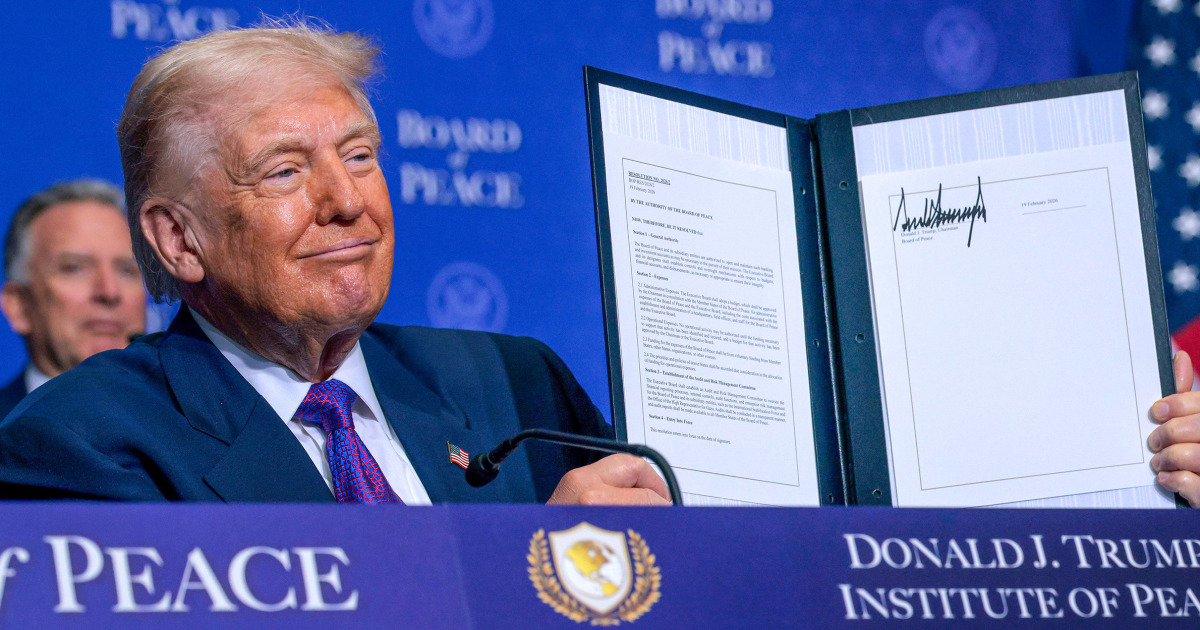
The Potomac sewage spill received more attention after Trump posted about it — blaming local Democratic politicians, particularly Maryland Gov. Wes Moore.

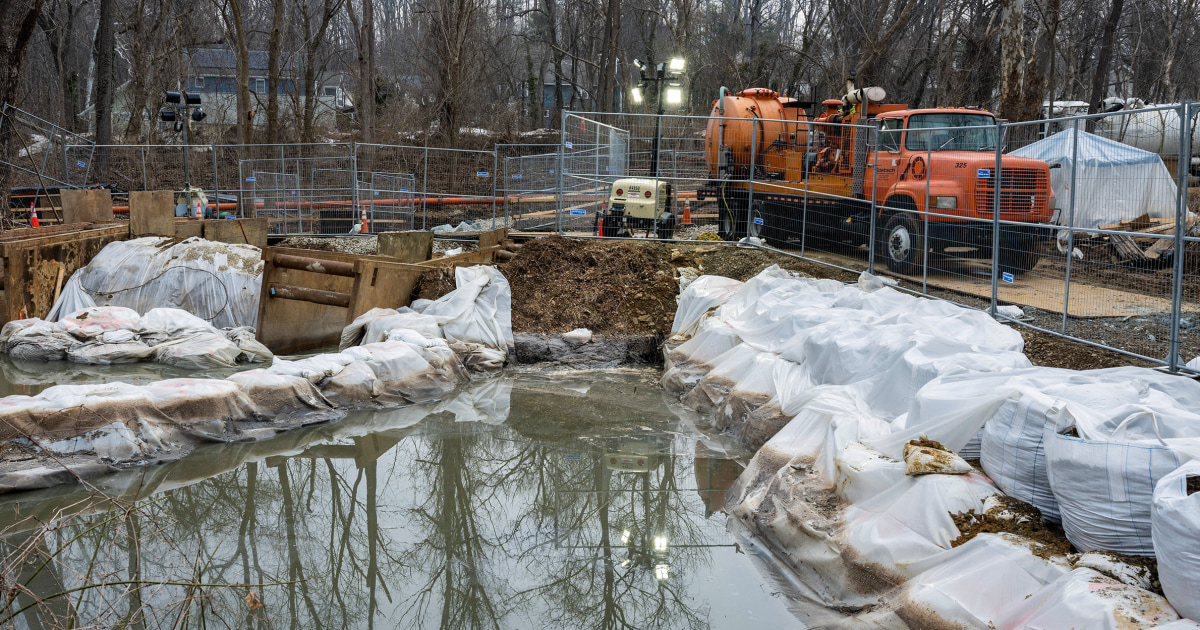
Image courtesy of The New York Times. From ‘Potomac sewage spills onto the national stage with political finger-pointing’ (February 19, 2026). Credit: Gary Grumbach . Source: https://www.nbcnews.com/politics/donald-trump/potomac-sewage-spills-national-stage-political-finger-pointing-rcna259770. © Original owner. Used under fair use.
Headline: Potomac Sewage Spill Escalates, Politicians Trade Blame as Residents Plea for Action
In the heart of America, a sewage spill that started over three weeks ago has now taken center stage on the national political landscape, with finger-pointing between politicians escalating as residents demand action.
Background
Since January 19, residents in a Maryland county bordering Washington D.C. have grappled with a broken sewer pipe, which has already released over 240 million gallons of raw sewage into the Potomac River. The situation took a dramatic turn on Tuesday when D.C. officials declared a public emergency and requested federal assistance to cover the expected multi-million dollar cleanup costs. Maryland, however, is yet to follow suit.
What Happened
- D.C.’s Mayor Muriel Bowser requested federal aid late last week, citing her decision as based on the situation’s assessment.
- The sewage spill occurred in Montgomery County, Maryland, and has resulted in a significant environmental hazard.
- Two states, the District, the federal government, and DC Water all work together in managing the area, complicating the response efforts.
- President Trump accused local Democratic politicians, particularly Maryland Governor Wes Moore, of neglecting their duties regarding the spill.
- Marc Elrich, Montgomery County’s executive, criticized Trump for his accusations, questioning whether they were merely a political talking point.
- Moore responded by asserting that Trump was lying about responsibility for the spill.
- The collapsed pipe is within the C&O Canal National Historic Park, which falls under federal jurisdiction, although DC Water owns and operates the Potomac Interceptor, with EPA regulation and oversight.
- A White House meeting with stakeholders from Virginia, Maryland, D.C., and DC Water took place on Wednesday, 30 days after the spill.
- FEMA and EPA officials visited the site of the collapsed Potomac Interceptor for the first time on Wednesday.
- Glen Echo Mayor Dia Costello expressed concern about long-term environmental impacts resulting from the spill.
- An EPA spokesperson stated that they have the expertise to clean up the mess promptly, but no request for taking over responsibilities has been made by DC Water or Maryland.
- DC Water confirmed that it had not requested EPA’s involvement.
What They Said
- Marc Elrich, Montgomery County Executive: “While we expect the federal government to fulfill its responsibilities regarding this incident, our residents deserve accurate information about the facts surrounding this spill. Does he actually really care? Or is this just a nice little talking point for him?”
- Wes Moore, Maryland Governor: “The president is lying about who is responsible for the spill.”
- Dia Costello, Glen Echo Mayor: “My biggest concern is the mid-term and long-term environmental effects and safety, of the soil, of the air, and of the waters.”
- EPA Spokesperson: “At no point has DC Water or the state of Maryland requested EPA to take over their responsibilities.”
Why It Matters
The sewage spill highlights the critical need for cooperation between various levels of government in addressing environmental disasters. The prolonged response time and finger-pointing underscore a troubling trend of politicization that can delay necessary action and exacerbate public health risks. Additionally, this incident serves as a stark reminder of the antiquated infrastructure challenges faced by many communities across the country.
The Other Side
Some argue that federal intervention may not be warranted or effective in managing local infrastructure issues, as the response so far has been delayed due to overlapping jurisdictions and responsibilities among multiple entities. Critics also contend that focusing too heavily on assigning blame may divert attention away from addressing the root causes of the issue and prioritizing solutions.
For Everyday Americans
The sewage spill in Maryland has direct implications for residents’ health, as well as their property values and overall quality of life. Cleanup efforts are expected to take several weeks, leaving many wondering how they can protect themselves and their families during this time.
What Comes Next
The next few weeks will see ongoing cleanup and repair efforts in Montgomery County, while local and federal officials continue negotiations regarding funding and responsibilities. Residents and environmental advocates are pushing for swift action to ensure the safety of their community and prevent similar disasters from occurring in the future.
Conclusion
The Potomac sewage spill has become a political battleground, with local residents left to grapple with the consequences. The incident serves as a microcosm of broader issues surrounding infrastructure maintenance, government cooperation, and politicization that have far-reaching implications for communities across the nation.
Join the Discussion
How can the federal, state, and local governments work together more effectively to address infrastructure issues like this sewage spill? Share your thoughts on what steps should be taken to ensure proper oversight, coordination, and accountability in addressing environmental disasters.
Source: The New York Times