Workplace Inspections by OSHA Dropped Over a Six-Month Period of 2025
Labor advocates worry that the Trump administration is relaxing oversight of companies and increasing the potential for serious injuries and deaths.

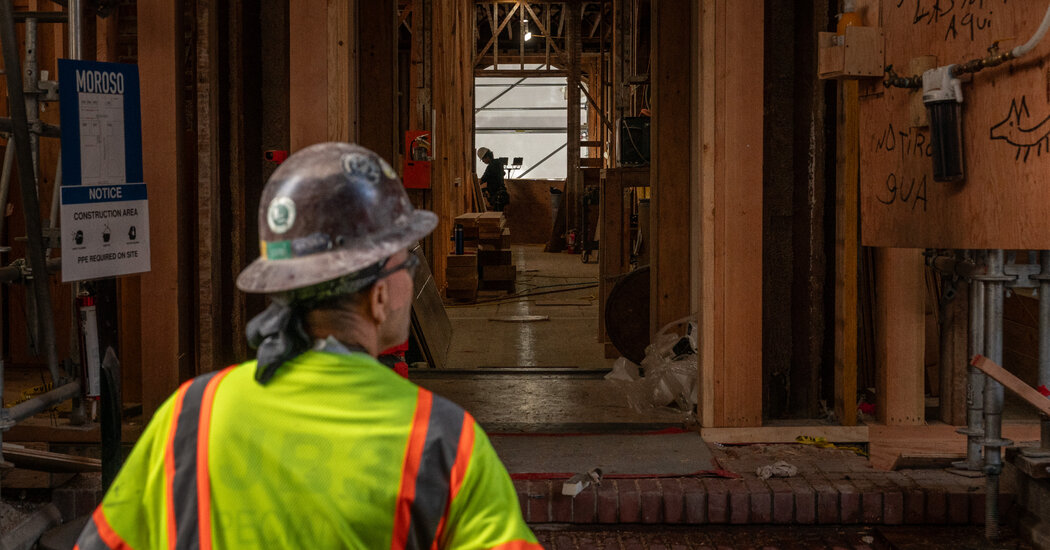
Image courtesy of The New York Times. From ‘Workplace Inspections by OSHA Dropped Over a Six-Month Period of 2025’ (February 18, 2026). Credit: Eileen Sullivan and Rebecca Davis O’Brien. Source: https://www.nytimes.com/2026/02/18/us/politics/workplace-inspections-decrease-osha.html. © Original owner. Used under fair use.
Workplace Inspections by OSHA Dropped Over a Six-Month Period of 2025
The Occupational Safety and Health Administration (OSHA) has seen a significant decrease in workplace inspections over the past six months, raising concerns among labor advocates that the Trump administration is easing its oversight of companies. According to internal data from the Labor Department, released by Senator Elizabeth Warren, OSHA conducted 23,531 inspections during this period in 2025, down 20 percent from the same time frame in 2024 when there were 29,229 inspections.
The decrease in inspections has sparked alarm among worker safety advocates, who worry that it may lead to an increase in serious injuries and deaths on the job. The Trump administration’s efforts to roll back regulations for worker safety and protections have been well-documented, including plans to close OSHA offices and offices that protect coal miners across the country. Additionally, the Labor Department has signaled its intention to pull back a requirement that employers provide adequate lighting at construction sites.
The drop in inspections comes as part of a broader pattern of deregulation efforts by the Trump administration. In its 2026 budget proposal, the administration suggested that OSHA would conduct only 24,929 inspections during the fiscal year, a number that some see as alarmingly low. This decrease in oversight has labor advocates worried that companies will take advantage of the relaxed enforcement to cut corners and put workers at greater risk.
Senator Warren and five other Senate Democrats have written a letter to Labor Secretary Lori Chavez-DeRemer and David Keeling, the assistant secretary at the department who oversees occupational safety and health. The senators expressed concern about the data, which also shows that inspections over this period yielded 42 percent fewer “willful violations,” a category that carries some of the highest penalties for employers.
“This is not just a matter of rolling back rules; OSHA appears to be taking a lighter hand in enforcing even the rules that still exist,” Ms. Warren wrote in the letter, echoing concerns raised by worker safety advocates. The data suggests that the administration’s efforts to ease regulations and oversight are having a tangible impact on workplace inspections.
The implications of this trend are far-reaching, with potential consequences for workers across the country. For everyday Americans who show up to work every day, the prospect of fewer safety inspectors and laxer enforcement is a disturbing one. Imagine going to a construction site or factory where corners are being cut and regulations are not being followed – it’s a recipe for disaster.
As the data suggests, OSHA’s reduced inspections have already led to a decrease in “willful violations,” which carry severe penalties for employers. This trend has serious implications for workers who rely on OSHA to protect them from hazardous conditions. With fewer inspectors and weaker enforcement, companies may feel emboldened to take greater risks with worker safety.
The debate over workplace safety and regulations is a contentious one, with opposing views on the role of government in policing workplaces. While some argue that regulations stifle business growth, others believe that they are necessary to protect workers from harm. As OSHA’s reduced inspections raise concerns about the potential for increased injuries and deaths, it’s clear that this debate will continue.
If you’re concerned about worker safety and the implications of OSHA’s reduced inspections, we want to hear from you. Share your thoughts on how companies can be held accountable for workplace hazards, or what steps should be taken to increase oversight and enforcement. What do you think is the most pressing issue facing workers in this country, and how can policymakers address it?
Source: The New York Times