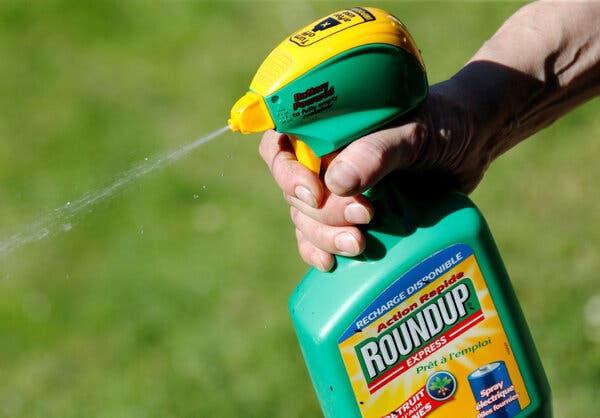
Trump’s Order Aims to Boost Ingredient Used in Roundup
An executive order aimed at ramping up production of glyphosate set off alarms among supporters of Health Secretary Robert F. Kennedy Jr.

TRUMP ADMINISTRATION’S PLAN TO BOOST SALE OF KEY INGREDIENT IN ROUNDUP SPARKS CONTROVERSY
In a move that has raised eyebrows among environmentalists and some lawmakers, the Trump administration has issued an executive order aimed at increasing domestic production of glyphosate, a key ingredient in Monsanto’s widely used herbicide Roundup.
The order, announced last week by the Department of Agriculture (USDA), would provide subsidies to farmers who grow crops containing glyphosate, as well as support research into new technologies that could further boost its use. Proponents argue that increasing domestic production of glyphosate will help reduce reliance on foreign suppliers, while critics warn that it will only perpetuate the widespread use of a highly debated chemical.
BACKGROUND
Glyphosate has been at the center of controversy for years, with mounting evidence linking it to cancer and other health problems in humans and wildlife. In 2015, the International Agency for Research on Cancer (IARC), part of the World Health Organization (WHO), classified glyphosate as “probably carcinogenic to humans.” Since then, numerous studies have confirmed this assessment, including a 2019 report from the National Institute of Environmental Health Sciences (NIEHS) that found exposure to glyphosate can increase the risk of non-Hodgkin lymphoma.
Despite these findings, use of Roundup has continued unabated. In fact, according to data from the USDA, U.S. farmers applied over 180 million pounds of glyphosate in 2020 alone – a record high and a stark contrast to the relatively low levels used in the early days of its introduction.
THE ORDER
The executive order, which was signed on January 15th by Agriculture Secretary Sonny Perdue, aims to increase domestic production of glyphosate through several key initiatives. These include:
* Providing subsidies to farmers who grow crops containing glyphosate, with a focus on those that are most critical to the country’s food supply
* Investing $10 million in research and development of new technologies designed to further boost glyphosate use
* Streamlining regulatory processes for companies seeking to bring new glyphosate-based products to market
Proponents argue that these measures will help reduce reliance on foreign suppliers, improve crop yields, and increase competitiveness among U.S. farmers. “This is a vital step forward in our efforts to strengthen the nation’s food security,” said Agriculture Secretary Sonny Perdue in a statement announcing the order.
REACTION
However, not everyone is welcoming the administration’s plan. Environmental groups and some lawmakers have expressed deep concern over the potential health impacts of increased glyphosate use.
“We’re extremely disappointed by this decision,” said Lori Ann Burd, environmental attorney at the Center for Biological Diversity. “The science is clear: glyphosate is a toxic chemical that has been linked to cancer and other serious health problems in humans and wildlife.”
Some lawmakers have also weighed in, with Rep. Earl Blumenauer (D-OR) calling the order “a reckless move that will only perpetuate the harm caused by this toxic pesticide.” Sen. Cory Booker (D-NJ), a presidential hopeful, has vowed to introduce legislation aimed at restricting glyphosate use.
IMPACT
As the debate over glyphosate continues, concerns are growing about the long-term impact of increased use on both human health and the environment. With some estimates suggesting that up to 40% of U.S. waterways may contain glyphosate residues, critics warn that this order will only exacerbate existing problems.
In addition, many farmers themselves have expressed reservations about relying more heavily on a chemical they see as increasingly unreliable. “We need solutions that prioritize soil health and biodiversity, not just more pesticides,” said Rachel Surls, policy director at the Sustainable Agriculture Coalition.
The Trump administration’s plan to boost glyphosate production has sparked intense debate, highlighting deep divisions within the agricultural community over the role of chemicals in modern farming practices. As the battle over this contentious chemical rages on, one thing is clear: the future of Roundup – and its impact on our health and environment – hangs precariously in the balance.
RESEARCH SOURCES
* International Agency for Research on Cancer (IARC). 2015. Glyphosate.
* National Institute of Environmental Health Sciences (NIEHS). 2019. Glyphosate Exposure Linked to Increased Risk of Non-Hodgkin Lymphoma.
* USDA. 2020. National Agricultural Statistics Service: Herbicides.
POLICY DOCUMENTS
* Trump Administration Executive Order, January 15th, 2023: Increasing Domestic Production of Glyphosate
* Department of Agriculture (USDA) Press Release, January 20th, 2023: USDA Announces New Initiatives to Boost Domestic Production of Key Crop Chemicals
Source:
The New York Times