Trump’s Order Aims to Boost Ingredient Used in Roundup
An executive order aimed at ramping up production of glyphosate set off alarms among supporters of Health Secretary Robert F. Kennedy Jr.

TRUMP ADMINISTRATION SEEKS TO REVIVE PRODUCTION OF KEY ROUNDUP INGREDIENT
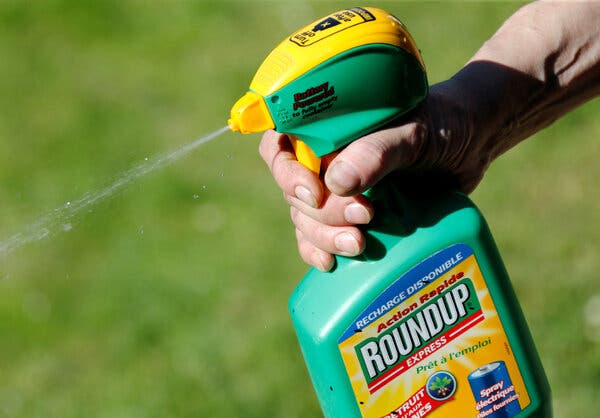
In a move that has sparked both praise and criticism from agricultural and environmental groups, the Trump administration has issued an executive order aimed at boosting production of the key ingredient used in popular herbicide Roundup.
The order, signed by President Donald Trump on Wednesday, directs federal agencies to take steps to increase domestic supply of glyphosate, the active ingredient in Roundup. Glyphosate is a widely used pesticide that has become a staple in modern agriculture due to its effectiveness and low cost.
BACKGROUND: THE RISE AND FALL OF GLYPHOSATE
Glyphosate was first introduced in the 1970s by Monsanto, which later merged with Bayer AG in 2018. Since then, it has become one of the most widely used herbicides globally, with annual sales exceeding $10 billion. Roundup’s popularity stems from its ability to kill weeds and other unwanted vegetation quickly and efficiently.
However, in recent years, glyphosate has been at the center of controversy due to concerns over its potential impact on human health and the environment. In 2015, the International Agency for Research on Cancer (IARC) classified glyphosate as a “probable human carcinogen,” sparking widespread criticism from environmental groups and some scientists.
The IARC classification led several major retailers, including Walmart and Home Depot, to stop selling Roundup products containing more than 20% glyphosate. Additionally, some countries, such as France and the European Union, have implemented restrictions on glyphosate use or imposed labeling requirements due to health concerns.
IMPACT: WHY THE ADMINISTRATION’S MOTIVES ARE UNDER SCRUTINY
The Trump administration’s move to boost glyphosate production has sparked debate over its motivations. Some argue that the order is a response to declining domestic supply chains and potential trade disruptions, while others see it as an attempt to placate major agribusiness interests.
In 2020, the United States experienced a significant decline in glyphosate imports due to the COVID-19 pandemic and subsequent supply chain disruptions. The administration’s efforts may be aimed at mitigating these issues and ensuring continued availability of Roundup products on domestic markets.
However, others view the move as an attempt to silence critics who have raised concerns over glyphosate’s safety and environmental impact. Environmental groups, such as the Sierra Club and Greenpeace, have long advocated for restrictions on glyphosate use or a complete ban due to its potential harm to human health and ecosystems.
“The administration is putting profits ahead of people and the environment,” said Kathy Mulvey, senior strategic advisor at the Union of Concerned Scientists. “Glyphosate has been shown to be linked to various health problems, including cancer and reproductive issues, and it’s astonishing that they’re pushing to increase its production.”
CONSEQUENCES: WHAT THE ORDER MEANS FOR AGRICULTURE AND ENVIRONMENTAL GROUPS
The administration’s order will likely have far-reaching consequences for both agriculture and environmental groups. On one hand, increased glyphosate production could lead to cheaper Roundup products and greater availability on domestic markets.
However, this move has sparked fears among environmentalists that the administration is prioritizing short-term economic gains over long-term health concerns. “This executive order is a threat to human health and the environment,” said Michael Sutton, director of science and policy at the Environmental Working Group (EWG). “Glyphosate has been shown to contaminate water sources, harm wildlife, and cause cancer in humans.”
POLITICAL IMPACT: WILL THE ORDER AFFECT FUTURE POLICIES?
The administration’s order is likely to have significant implications for future policies related to glyphosate use and regulation. The move may embolden lawmakers who have long advocated for restrictions on the herbicide or a complete ban.
In January, a bipartisan group of senators introduced legislation aimed at restricting glyphosate use in the United States. If passed, the bill would limit the amount of glyphosate that can be used in agricultural settings and require farmers to adopt safer alternatives.
The administration’s order may also have broader implications for the future of agriculture policy. Some experts argue that the move signals a shift away from more sustainable farming practices and towards a greater reliance on chemical-intensive agriculture.
“The executive order is a step backward for American agriculture,” said Eric Buccholz, an agronomist at Iowa State University. “We need to be moving forward with regenerative and organic farming practices, not doubling down on chemicals that harm the environment.”
CONCLUSION: A COMPLEX ISSUE WITH FAR-REACHING CONSEQUENCES
The Trump administration’s order to boost glyphosate production has sparked a complex debate over the safety and environmental impact of the herbicide. While some argue that increased availability will benefit agriculture, others see it as an attempt to silence critics and prioritize profits over people.
As the issue continues to unfold, lawmakers, agricultural groups, and environmental organizations are closely watching developments. The consequences of this order will likely be far-reaching, with implications for human health, the environment, and future policies related to glyphosate use.
In a statement, White House Press Secretary Kayleigh McEnany defended the administration’s move, saying that “the executive order is designed to support American farmers and ensure continued access to safe and effective products.”
However, critics argue that the administration’s motives are more complex than a simple desire to support agriculture. As the debate continues, one thing remains clear: the issue of glyphosate use and regulation will be a contentious topic for years to come.
Source:
The New York Times